

Diffusion Temperature Sampling and Projective Ray Positional Encoding for Multi-view Attention
Abstract: Inductive biases have proven effective and often essential in the design of performant deep learning systems. This thesis presents two contributions that target distinct facets of how inductive biases can improve modern deep models. In Part 1, we focus on controlling the diversity--likelihood trade-off at inference-time of generative models. In Part 2, we study the [...]

Learning Bayesian Experimental Design Policies Efficiently
Abstract: Bayesian Experimental Design (BED) provides a principled framework for informative data collection, and is applied across domains as varied as adaptive clinical trials, ecological monitoring, hyperparameter optimization, and robotic search. Despite this broad applicability, BED methods remain difficult to deploy in practice: high-quality decision-making is computationally expensive, calibrated uncertainty estimation in sequential decision problems [...]

Quanta Perception as Probabilistic Events
Abstract: Autonomous systems ultimately rely on extracting information from light, yet remain brittle in extreme environments, from nighttime navigation to high-speed robotics. This limitation stems from a classical imaging abstraction: conventional sensors integrate photon flux over fixed exposure windows, imposing trade-offs between sensitivity, dynamic range, and temporal resolution that degrade perception when photons are scarce [...]

Robot Learning and Wearable Interfaces in Pursuit of Robotic Caregivers
Abstract: Designing safe and reliable robotic assistance for caregiving is a grand challenge in robotics. A sixth of the United States population is over the age of 65 and more than 1 in 4 (over 70 million) adults in the United States reported having a disability in 2022. Robotic caregivers could positively benefit society; yet, physical [...]

Deep Abstraction Learning for Neuro-Symbolic World Modeling
Abstract: Modern foundation models have achieved remarkable progress by learning broad physical and semantic common sense from large-scale data. However, robots operating in open-ended environments require more than general knowledge alone: they must continually specialize in new tasks, environments, and experiences encountered during deployment. Given only limited deployment-time data, how can robots learn to solve substantially more—and [...]

Designing A Learning-Enabled Non-Anthropomorphic Robotic Hand Framework for Dexterous Manipulation
Abstract: As robots transition into unstructured human environments, achieving dexterous manipulation across diverse tasks becomes increasingly crucial yet remains challenging. This objective underscores the value of high-degree-of-freedom (DoF) robotic hands capable of versatile grasping and in-hand manipulation. Complementing the hardware, success in these settings also depends on intelligent and autonomous hand control strategies that provide [...]

Contact-Rich Manipulation with Vibro-Tactile Sensing
Abstract: Contact-rich manipulation requires reasoning about complex physical interactions. While vision and force sensing provide useful information, many interaction dynamics remain difficult to observe directly, especially under occlusion, rapid contact transitions, or distributed contact. This thesis explores how vibro-tactile sensing, also known as structure-born acoustic sensing, can serve as a practical and information-rich modality for [...]
RI PhD Speaking Qualifier / MSR Talk – Yuemin Mao
TBD

RI PhD Thesis Defense – Junyu Nan
Date: Tuesday May 19, 2026 Time: 1:00 - 3:00PM (EST) Location: NSH (Newell Simon Hall) 3305 Zoom Link Type: PhD Thesis Defense Title: Learning Geometric, Physical, and Semantic Priors for Embodied Planning and Control Abstract: Embodied intelligence requires perceiving, predicting, and acting in environments with an understanding of the geometric, semantic, and physical structure of the world. Recently, [...]

RI PhD Thesis Proposal – Renos Zabounidis
Date: May 20th, 2026 Time: 3:00 - 4:30 pm Location: NSH 4305 Zoom Link Type: RI PhD Thesis Proposal Who: Renos Zabounidis Title: Enforcing Neuro-Symbolic Structure in Deep Reinforcement Learning Abstract: Monolithic deep reinforcement learning trains a single network to learn vision, physics, planning, and control from reward alone. The result is poor sample efficiency, [...]

Scalable Imitation Learning for Robust Manipulation and Physical Human-Robot Interaction
Abstract: Robots in everyday human environments are expected to perform robust manipulation across cluttered, constrained, and physically interactive settings. This thesis studies how scalable simulation-based data generation can train vision-based imitation learning policies for robust zero-shot transfer to the real world. In the first part of this thesis, we study robotic manipulation in cluttered shelf [...]

Generalizable Neural Dynamics Modeling for Complex Deformable Object Manipulation
Abstract: Hair care is an essential daily activity, yet it remains inaccessible to individuals with limited mobility and challenging for autonomous robot systems due to the fine-grained physical structure and complex dynamics of hair. This thesis presents DYMO-Hair, a model-based robot hair care system. We introduce a novel dynamics learning paradigm that is suited for [...]

RI PhD Thesis Proposal – Anurag Ghosh
Date: May 21st, 2026 Time: 3:30 - 5:00 pm Room: NSH Room 4305 Zoom: https://cmu.zoom.us/j/98318417145 Type: RI PhD Thesis Proposal Who: Anurag Ghosh Title: Scaling Long-Tailed Driving Perception and Planning with In-the-Wild Videos Abstract: Closed-loop driving, where methods produce actions a simulator reacts to, remains largely tied to driving logs from instrumented fleets. Thus, reliably driving in rare-but-critical scenarios is [...]
RI PhD Thesis Defense – Kenneth Shaw
Date: Friday May 22 Time: 3:30PM - 4:30PM (EST) Location: NSH (Newell Simon Hall) 3305 ZOOM Link Title: Building Robot Hands and Teaching Dexterity Abstract: Our human hands are masterpieces of power and precision, capable of typing, hammering, or delicately using chopsticks. Yet most robots today still rely on simple two-finger grippers in controlled settings because dexterous hands are [...]

Toward Real-World Autonomous Off-Road Driving with Reinforcement Learning
Abstract: Off-road autonomous driving presents significant challenges such as navigating unmapped variable environments, traversing difficult terrain geometries such as steep slopes and ditches, and managing complex terrain dynamics. Addressing these challenges requires effective low-level adaptable control and long-horizon planning. Most existing methods utilize Model Predictive Control (MPC) methods such as Model Predictive Path Integral (MPPI), [...]

Explore and Exploit: Learning Policies for Efficient and Coordinated Active Search
Abstract: Robotic search is becoming a central capability in domains where the world is large, uncertain, and costly to inspect directly: search and rescue, environmental monitoring, surveillance, and infrastructure inspection. In these settings, the hard problem is not perception alone but the online sensing decision: where to look next as evidence arrives, while every motion [...]

Hierarchical Sub-Goal Policies for Generalizing Robot Manipulation
Abstract: Imitation learning has emerged as a leading paradigm for teaching manipulation skills to robots, but its success depends on the costly endeavour of collecting robot demonstrations through teleoperation. Generalizing to novel objects, environments, and task variations typically requires massive datasets that are expensive to scale. This thesis investigates an alternative lever: hierarchy—explicitly factorizing manipulation [...]

User Intent-Driven and Context-Aware Personalization for Assistive Exoskeletons
Abstract: Personalizing exoskeleton control to individual preferences is crucial for real world deployment. Data-driven approaches have enabled user-generalizable controllers, yet conventional personalization methods optimize biomechanical cost functions over user preferences. Prior work shows that users can perceive and report their preferred parameters, yet no lightweight method maps user intent to quantitative control parameter changes in [...]

Design and Evaluation of Low-Cost, Open-Source Haptic Interfaces for Diverse Learning Applications
Abstract: Touch is a powerful yet underused channel for learning. Prior research shows that haptic interaction can support both sensorimotor skill acquisition and the understanding of abstract concepts by grounding learning in bodily experience. However, most haptic devices remain expensive, technically complex, and difficult to reproduce, which keeps them largely confined to specialized laboratories. This limits [...]

Scaling Sim2Real Learning for Robot Manipulation
Abstract: Recent progress in robot learning has led to impressively capable manipulation systems. Much of the progress has come from scaling up human demonstrations; however, collecting such data through manual teleoperation is slow, costly, and hard to scale. Physics-based Simulation offers a scalable, safe, and efficient alternative for generating large demonstration datasets. However, some core [...]

Annotation-Free Learning for Mobile Robot Navigation in Unstructured Environments
Abstract: Navigation in unstructured environments is a capability critical to many robotics applications such as forestry, construction, disaster response and defense. In these domains, robots have the potential to eliminate much of the dull, dirty and/or dangerous work that is currently performed by humans. Unfortunately, these environments pose a unique set of challenges for navigation not [...]

Autonomous Crop Manipulation: From Model-Based Reasoning to Learned Interaction
Abstract: Robots that manipulate crops must contend with plants that occlude themselves, deform under contact, and make the manipulator contact structures it neither targets nor sees in advance. This thesis argues that autonomous manipulation of crops in unstructured agricultural environments is best advanced not by choosing between model-based and learned approaches, but by integrating them [...]

Red and Blue Teaming for Robust Manipulation under Geometric Variations
Abstract: Robotic manipulation policies are typically evaluated on curated, in-distribution test sets, which offer limited insight into how these policies behave under plausible variation. One important source of this variation is geometric in nature, arising from small changes in object geometry that quietly alter grasp affordances and contact dynamics. Rather than treating robustness as a [...]

Integrating Structured Knowledge for State and Geometry Estimation
Abstract: Reliable state and geometry estimation from limited observations is a fundamental challenge in robotics and perception. Observations are often noisy, partial, or ambiguous, making estimation ill-posed without additional structure. This thesis argues that robust estimation in these regimes is enabled by integrating structured knowledge into the inference process. Estimation can be viewed as inferring [...]

Physical Process-Informed Mapping for Robotic Exploration
Abstract: Mobile robots used for information gathering tasks rely on dense, predictive mapping of large-scale regions to determine where to take measurements. Current approaches to mapping commonly rely on Gaussian process regression to spatially correlate data, extrapolate from sparse samples, and estimate uncertainty. However, these approaches do not incorporate meaningful information about physical processes that [...]

Aligning Observations Across Viewpoint, Time, and Embodiment for Agricultural Perception and Manipulation
Abstract: Agricultural specialists are actively turning to robotic and computer vision-based systems to reduce the manual labor required to inspect and manipulate crops. These tasks require robots to perceive and interact with plants from partial, localized observations, often in dense and cluttered environments. For perception, a central challenge is that crops are small, are easily [...]

Scalable Oversight Across Generative Visual AI: Toward Visual Storytelling for Everyone
Abstract: Generative visual AI has advanced by scaling data and compute, but its next bottleneck is oversight: the expert signals that evaluate, reward, and teach models what "good" looks like. Providing such oversight is increasingly difficult because foundation vision-language models now match or surpass most humans at the skills being judged. This thesis develops scalable [...]
Towards Fine-Grained Diagnosis of GUI Agents
Abstract: Graphical User Interface (GUI) agents need strong planning—what to do next—and grounding—where to click next—to solve user tasks. Yet these agents remain unreliable, and standard metrics such as task success or next-action accuracy often obscure why they fail. In this talk, I argue that reliable GUI agents require fine-grained diagnosis of core agentic capabilities, [...]

Embodied Design, Modeling, and Optimization for Bio-Inspired Aquatic Robots
Abstract: Bio-inspired aquatic robots offer a promising route to agile and efficient locomotion in fluid environments, where conventional rigid systems remain limited. In bio-inspired aquatic systems, locomotion is not determined by actuation or control alone, but instead emerges from tightly coupled interactions among body morphology, distributed compliance, actuation, onboard sensing, and the surrounding flow, making [...]

Integrating Learning and Collaboration for Human-Robot Alignment
Abstract: The alignment problem for robots considers how robots can learn to behave in accordance with human values. Today, robot learning paradigms enable humans to provide data (e.g., preference labels or demonstrations), which the robot uses to update its behavior (e.g., reward model or policy) to better align with human intentions. However, the current paradigm requires [...]

Towards Generalizable Embodied Navigation with Vision-Language Models
Abstract: Embodied navigation asks an autonomous agent to move through unknown environments and accomplish tasks such as finding objects or following instructions. Reliable performance in real-world settings, from household assistance to warehouse logistics, requires the agent to tightly integrate perception, semantic reasoning, and long-horizon planning under cluttered layouts, ambiguous appearances, and robot-specific constraints. Vision-language models [...]

From Margin to Center: Designing Inclusive & Equitable Service Robots with Disabled Adults
Abstract Service robots – autonomous systems that perform personal and professional tasks – have become a common sight in the Global North. In Human-robot interaction (HRI), researchers rarely consider the design implications of service robots for people with disabilities (PwDs) beyond controlled assistive contexts, such as private homes and assisted living facilities. Nevertheless, the purview [...]

Towards Socially Intelligent Multi-Agent Systems: Zero-Shot MARL Coordination and Theory-of-Mind Benchmarking of LLM Agents for Strategic Deception
Abstract: An agent that performs well on its own may still struggle when working with others. In multi-agent environments, success depends not only on understanding the world but also on understanding what other agents know, intend, and conceal. Cooperative partners follow hidden conventions, while adversarial opponents deceive. This work argues that robust multi-agent behavior requires [...]

Data-Driven Representation and Reasoning for Aviation Safety
Abstract: Aviation safety analysis increasingly benefits from large-scale operational trajectory data, yet raw motion traces alone are insufficient for understanding safety-critical events on the airport surface. The significance of an aircraft’s motion depends on the structured operational environment in which it occurs, including runways, taxiways, hold-short lines, and interactions among multiple agents over time. This [...]

Brain-Aligned Tactile Representations for Dexterous Robot Learning
Abstract: Touch is the essential sensory modality through which animals and robots physically negotiate the world. While much of robotic touch focuses on the capabilities of currently available tactile hardware, this thesis asks a more general question: what forms of tactile processing and representation could allow robots to approach the dexterity of animals? This thesis [...]

RI PhD Thesis Defense – Angela Chen
Date: June 26, 2026 Time: 10:00 – 11:30 AM Location: GHC – Room 4405 Zoom Link Type: Ph.D. Thesis Defense Who: Angela Chen Title: Behavioral Modeling of Interpersonal Dynamics as Controllable Agentic Systems: Empirically-grounded Adaptive Virtual Patients for Psychotherapy Training Abstract: The need for mental health care continues to outpace the supply of trained psychotherapists. Training is itself a bottleneck because supervision [...]

Spatial Reasoning and Semantic Representations for Autonomous Exploration and Object Search
Abstract: Autonomous robot exploration and object search in unknown environments are fundamental capabilities in robotics, with applications ranging from search and rescue to structural inspection. A central challenge in both tasks is that robots often must make decisions based on information they have not yet directly observed–reasoning about unexplored space, predicting future information gain, or [...]

Learning From History: Test-Time Verification and Adaptation for Robotics
Abstract: The physical properties and dynamics that decide how an object or environment responds to a robot's actions are often impossible to determine from visual observation alone. An object's mass distribution and friction, the kinematics of an articulated object: these latent factors dictate the correct action, yet they leave little or no trace in a single [...]

View Generalizable Manipulation Policies via Sim-to-Real Transfer
Abstract: Visual imitation learning is a promising approach to training robot manipulation policies capable of completing a wide variety of tasks. A key requirement for these manipulation policies is to exhibit robust generalization capabilities when deployed in the real world, where the objects, scenes, and sensors a robot encounters differ from those seen during training. In [...]
Learning-Guided Search over Continuous Actions for Long-Horizon Robot Manipulation
Abstract: Despite recent advances in policy learning, long-horizon manipulation remains difficult because learned policies must avoid compounding errors while preserving future feasibility. While search-based planning can explicitly reason over future consequences, it becomes expensive in high-dimensional continuous action spaces. Classical Task and Motion Planning methods address this by introducing symbolic objects, relations, and abstractions for [...]

Exploring High-Level Goal Prediction for Hierarchical Imitation Learning in Robotic Manipulation
Abstract: Hierarchical imitation learning has become an effective approach for robotic manipulation: a high-level policy predicts a sub-goal end-effector pose, while a low-level policy executes the actions needed to reach it. This decomposition improves generalization and provides an interpretable interface, but the design of the high-level goal predictor remains an open question. This thesis studies [...]

Beyond Vision-Language-Action Models: Adapting, Steering, and Accelerating Generalist Robot Policies
Abstract: Generalist robot policies, vision-language-action models that combine a large pretrained vision-language model backbone with a diffusion or flow-matching action head, are increasingly capable, yet hard to deploy in the real world. Three gaps separate such a policy from a deployable one: a data gap (adapting to a new task still demands task-specific teleoperation data), an inference gap (the policy [...]

Carnegie Mellon University
Towards Scalable Robot Learning: From Teleoperation to Web-scale Data
Abstract: Humanoid robots operating in human environments must manipulate articulated objects under contact and kinematic constraints that human demonstrations do not satisfy. That mismatch makes the human--humanoid embodiment gap the central bottleneck for learning from human data: robot demonstrations are expensive and sparse, while human demonstrations inhabit a different state-action space and often violate robot [...]

Toward Curiosity-Driven Embodied Learning Through World Models
Abstract: Curiosity allows animals and humans to learn through interaction without explicit instruction. This thesis asks how principles of natural curiosity can be translated into embodied agents, and what kinds of world models are needed as bodies, action spaces, and environments become more complex. We study this progression in simulation, using animal behavior and neural dynamics [...]

Consistent Modeling of 4D Scenes for Perception and Generation
Abstract: A core challenge in vision is building representations that capture 3D scenes over time for both perception and generation. This thesis studies consistency across views, time, and modalities by moving from dense grid-based representations toward entity-centric scene representations that can be maintained across frames and used for interactive generation. The first part of the [...]

Data Mining and Auto-Labeling for Promptable Driving Policies
Abstract: Autonomous vehicles (AVs) are being deployed at scale today, with companies like Waymo achieving upward of 500,000 passenger rides per week. Two of the largest remaining problems in the field are 1) building a system that generalizes across the long-tail of edge cases that are represented few or no times within the training data [...]

MapForest: A Modular Field Robotics System for Forest Mapping
Abstract: Forests present compounding challenges for mobile mapping systems. Dense canopy degrades GNSS, uneven terrain demands deployment across diverse platforms, and no single sensing platform can capture the full vertical structure of a forest — from the canopy above to the understory below. Yet precise, georeferenced maps of individual trees are exactly what ecologists and [...]

Knowledge Graph-Augmented Reinforcement Learning: Injecting Structured Task Knowledge into Arbitrary Policy Architectures
Abstract: Reinforcement learning agents in complex tasks often require extensive exploration of large state spaces before useful structure emerges. Instead of pure exploration for learning tasks, it is possible to leverage high-level semantic knowledge such as recipes, instructions, or labels, and adapt to new tasks by grounding that prior knowledge in the environment. This talk [...]

Tracing Generated Content Back to Training Data
Abstract: AI-generated content is inherently derived from training data, yet it remains a mystery which specific data points large generative models rely on for a given generation. To address this, my research focuses on training data attribution—identifying the training images that are most influential in synthesizing a specific output. The ideal objective is to find [...]

Modeling Inter-Agent Interactions: A Spatiotemporal Attention Approach to Multi-Agent Action Anticipation
Abstract: Anticipating the near-future actions of multiple people is central to embodied systems that plan and coordinate in shared environments, yet most research targets a single agent and ignores the inter-agent dependencies that shape group behavior. This thesis presents InteractFormer, a unified model that treats inter-agent interaction as a first-class signal: operating directly on fine-grained [...]

Cutting the Skip: Training Residual-Free Transformers
Abstract: Transformers are ubiquitous. They influence nearly every aspect of modern AI. However, the mechanics of their training remain poorly understood. This poses a problem for the field due to the immense amounts of data, computational power, and energy being invested in the training of these networks. I highlight a recent intriguing empirical result from [...]

Towards Smarter and Safer Self-Improving AI
Abstract: As AI systems become more capable, further progress may depend not only on scaling models and training data, but also on enabling systems to evaluate and improve their own behavior and development. This raises a dual challenge: how can we make self-improvement more effective while ensuring increasingly autonomous systems remain trustworthy? This thesis investigates [...]

Evaluating World Models in Embodied Question Answering through Computational Primitives and Difficulty Progressions
Abstract: Language modeling progress is largely evidenced by steadily rising scores on benchmarks of increasing apparent difficulty. From this, the field infers increasingly general capabilities, many of which presuppose robust world modeling. Interpreting a score, however, requires understanding both the task's computational requirements and how the test-taker generalizes from them. Unlike humans, who demonstrably generalize [...]

A Robotic System for Tree Nursery Automation
Abstract: The United States Green Industry faces a persistent labor shortage that motivates the adoption of agricultural automation. However, existing systems are not designed for the unstructured, densely planted environment of a tree nursery. This thesis presents a robotic system intended to alleviate this shortage while remaining usable by non-technical farmers, built around a [...]

Understanding Image Intrinsics Through Light and Heat
Abstract: This talk examines the physical interplay between light and heat: what is absent in the visible image—light not reflected by the scene—is absorbed as heat and manifests in the thermal spectrum. This process intrinsically couples illumination, material properties, and heat transport. By exploiting this coupling, a single visible–thermal image pair provides complementary information that enables [...]

Hierarchical Manipulation Policies: Adapting to Unseen Objects and Discovering Sub-goals
Abstract: A robot that manipulates one object well may still fail on the next. Generalizing across diverse objects and tasks is hard because such objects vary widely in geometry, articulation, and interaction dynamics. Hierarchical policies offer a powerful approach: a high-level policy predicts sub-goal end-effector poses, and a low-level policy generates the actions to reach [...]

From Following to Leading: Adaptive Collaboration and Influence for Multi-Agent Teaming
Abstract: Autonomous agents and robots are taking on increasingly collaborative roles alongside people, from self-driving vehicles that navigate roads alongside human drivers, to language-model agents that understand user intentions and execute tasks independently. In each of these settings, success is determined not only by an agent's individual task competence, but by its ability to work [...]

What needs to be learned in robot learning? A case study: learning battery insertion from a diagram
Abstract: Manual diagrams are a rich and common knowledge source humans use to learn new skills, but their use for robot learning is still underexplored. A challenge with instruction diagrams is that they communicate task progression in a sparse, qualitative visual format, relying on the learner's prior physical understanding to fill in unmentioned execution details. [...]

Robust Visuomotor Policy Learning in Uncertain World Models
Abstract: World models have shown promise in robotics by imagining future outcomes of robot actions directly from high-dimensional sensor observations. However, learning visuomotor policies with world models still faces significant reliability challenges, as imagined futures from world models often diverge from the outcomes that may actually occur. This unreliability arises from uncertainty in learned world [...]

Terrain-Aware Dynamics Models for High-Speed Off-Road Navigation
Abstract: High-speed autonomy in the real world requires accurate control, which often relies on dynamics models that capture the complex interaction between a robot and its environment. In off-road regimes, this terrain interaction dominates the robot’s dynamics, driven by formidable characteristics such as diverse surface properties, complex geometries, environment diversity, and high-speed instability. This thesis investigates how [...]

Robotic Localization and Mapping of Disease in Apple Orchards
Abstract: United States apple growers lose more than $100 million a year to fire blight, a bacterial disease caused by Erwinia amylovora that is detrimental to pome fruit trees such as apple and pear.This bacterium infects blossoms, shoots, and branches during the bloom season causing tissue to die. Therefore, the detection and removal of infected tissues over [...]

The Tail and the Judge: Better Policy Gradients and World Models for Reinforcement Learning
Abstract: A quiet shift has taken place in how reinforcement learning delivers results. Increasingly, performance comes not from a single attempt but from selection over many: a language model is sampled repeatedly and judged by its best verified answer, and a planning agent imagines many action sequences and executes the one its learned world model [...]

Efficient cross-embodiment transfer via world models and policy steering
Abstract: Learning robot manipulation policies typically requires large amounts of high-quality demonstration data, which is expensive to collect on real robots. While large robot and human datasets exist, embodiment gaps make transferring knowledge between platforms challenging. This thesis investigates cross-embodiment transfer—how robots can learn from experience collected on different robots and humans to reduce the [...]

The Limits of Prompt-Based Self-Improvement in Language Model Agents: Meta-Optimization and Failure Attribution
Abstract: Modern language models’ in-context learning and instruction-following abilities make it possible to adapt agent behavior without updating model weights. This thesis studies online self-improvement, where an agent encounters each task only once and must accumulate reusable experience across a sequence of tasks, reflecting real-world deployments in which actions have persistent consequences and retries may [...]

Exploiting Structure for Real-Time Robot Motion Planning and Control
Abstract: Real-time robot motion in dynamic and uncertain environments requires algorithms that can make effective decisions under strict computational constraints. High-fidelity dynamics, large search spaces, uncertainty over future outcomes, and the pursuit of optimal motion each impose substantial computational costs. These challenges become especially pronounced in partially observable and rapidly changing environments, where a robot [...]

Reference-Prompted Instance Segmentation for Growing Retail Catalogs
Abstract: Retail and warehouse perception systems work against a catalog that never stops changing: a segmenter deployed today will eventually be asked to find products that did not exist when it was trained. A closed-set segmenter can only grow its vocabulary by widening its classification head and fine-tuning it, which risks the classes it [...]

Passive Ranging via Differential Defocus
Abstract: Depth sensors are essential wherever robots, vehicles, and wearables must understand 3D scenes. As these applications spread to ever smaller platforms, like drones, underwater vehicles, mobile and wearable devices, building depth sensors that are more compact and more power-efficient has become a priority in both academia and industry. Today, two approaches dominate: active systems [...]

Risk-Aware Multi-Agent Navigation in Dynamic Smoke Environments
Abstract: In wildfire scenarios, deploying autonomous drones requires safely anticipating the dynamic behavior of dense smoke to coordinate effectively. Unlike traditional rigid obstacles, smoke represents a fast-moving, complex fluid hazard that impairs visual navigation and onboard sensors. In this thesis, we propose a novel risk-aware, multi-agent path planning framework that treats dynamic smoke as a [...]

[MS Thesis Talk] Marble: An On-Manifold Approach to Solving Mathematical Programs with Complementarity Constraints
Date: Thursday, July 30, 2026 Time: 3:30 PM - 4:30 PM Location / ZOOM Link: (GHC 6115 / https://cmu.zoom.us/j/96096959582 ) Abstract: Many problems in robotics require reasoning over a mix of continuous dynamics and discrete events, such as making and breaking contact in manipulation and locomotion. These problems are locally well modeled by quadratic programs [...]
Marble: An On-Manifold Approach to Solving Mathematical Programs with Complementarity Constraints
Abstract: Many problems in robotics require reasoning over a mix of continuous dynamics and discrete events, such as making and breaking contact in manipulation and locomotion. These problems are locally well modeled by quadratic programs with complementarity constraints (QPCCs). While very expressive, QPCCs are non-convex problems, and few solvers exist for computing fast, local solutions [...]

Simulate to Learn, Learn to Simulate for Dexterous Robot Control
Abstract: Simulation enables robots to learn and evaluate behaviors at scale before real-world deployment. Yet the mismatch between simulation and the physical world remains a fundamental obstacle. This is particularly challenging for dexterous manipulation, where contact-rich interactions and dynamics variations across objects and robot embodiments are difficult to model. In my thesis research, I explore [...]

Towards Modeling GPS Noise via Raytracing
Abstract: Autonomous robot navigation relies heavily on visual-inertial state estimation, which inherently accumulates drift over extended trajectories. Fusing Global Navigation Satellite System (GNSS) signals mitigates this drift, but evaluating these systems in hardware is resource-intensive. Therefore, existing works often rely on simplified, static noise models to generate GNSS measurements. This thesis presents a raytracing-based GPS [...]

Using Sound to Steer Light and Light to Measure Sound
Abstract: Light and sound are traditionally treated as distinct physical phenomena, yet their interaction provides a powerful mechanism for manipulating and sensing information across imaging, communication, and measurement. This talk explores computational acousto-optic systems that co-design acoustics, optics, and signal processing to enable programmable control of light and high-speed optical sensing without mechanical motion. [...]

Robot Manipulation Capabilities and Grounded Task Axes
Abstract: Robots operating in open-world environments will need to understand the scope of their capabilities, recognize their limitations, and determine how those capabilities can be expanded. This talk will review research from the Intelligent Autonomous Manipulation Lab on modeling robot capabilities, allocating learning resources to expand them efficiently, and structuring skills for a given scope [...]

My Bitter Lesson with Computer Graphics
Abstract: In his essay "The Bitter Lesson," Richard Sutton argued that general methods leveraging computation ultimately outperform hand-crafted ones. In this talk, I share my own version of this lesson, learned the hard way over a decade in computer graphics. Where does the bitter lesson apply to graphics, and where does it not? I argue [...]

Scalable Vision-Language Models through Unified 2D and 3D Representations
Abstract: Vision-language models have become remarkably capable on images and short videos, yet they still struggle with two abilities central to embodied intelligence: spatial understanding and long-range temporal reasoning. A major reason is representational: today's models process videos as long sequences of 2D patches, so computation grows with observation length even when the underlying scene [...]

RI Faculty Business Meeting
Meeting for RI Faculty. In person location - NSH 4305. Zoom link available via calendar invite.
CANCELED – Trust, Sensing, and Learning for Provable Multi-Robot Performance
Seminar Canceled This seminar has been canceled and may be rescheduled for a future date. Please check back for updates. Abstract: Multi-robot systems are physically embodied networks — they sense, move, and communicate through the physical world. The bar for safe decision-making rises as these systems enter safety-critical, real-world settings where they must perform [...]

From Simulation to the Real World: A Multi-Level System for Object Navigation with Vision-Language Models
Abstract: Object navigation (ObjectNav) asks a robot to find an instance of a target object category in an unknown environment, which demands perception, spatial reasoning, and long-horizon decision making at once. Today's autonomous robots excel at mapping and moving through space yet lack high-level semantic intelligence, while vision-language models (VLMs) offer rich commonsense reasoning but [...]

Computational Lensing
Abstract: From the cameras in our phones to the lenses in head-mounted displays, optics shape both how we capture the world and how we experience virtual reality. Most conventional lenses are designed to bring a single plane into focus. In this talk, we will discuss a new class of computational lens—referred to as a Split-Lohmann [...]

Augmenting Bee Colonies with Robotics and AI Technologies for Ecosystem Support
Abstract: Earth’s ecosystems are facing a rapid decline in biodiversity, with honeybees —keystone pollinators critical to ecosystem stability— being among the most affected. The EU-funded RoboRoyale project addresses this crisis by integrating advanced robotics and AI to augment the beehive, enabling observation at unprecedented resolutions and scales. Featured on the cover of Science Robotics and [...]

Making is Decision Making
Abstract: Human creation of high-quality content requires making decisions – from coarse, high-level decisions about content and style, to precise low-level decisions about the color of an individual pixel. Modern generative AI promises to serve a collaborative assistant capable of executing design decisions specified in simple text prompts into high-quality content. Yet today’s AI systems [...]

RI PhD Thesis Defense – Ingrid Navarro Anaya
Date: September 18th, 2026 Time: 10:00 AM (ET) Zoom: link Location: NSH 4305 Type: PhD Thesis Defense Who: Ingrid Navarro Anaya Title: Towards Generalizable Motion Prediction under Distribution Shifts Abstract: Autonomous robots are increasingly expected to operate in dynamic, human-centered environments. To do so safely and efficiently, they must reason about how people move [...]

A Reactive Vibration Compensation System for Discrete Material Deposition Processes
Abstract: Ultra Large Format Deposition (ULF-D) systems perform precision material deposition over large workspaces, yet their extended and mechanically compliant structures can produce configuration-dependent vibration at the tool mounted to the robot's end-effector. In inkjet printing, vibration perturbs the deposition tool such that each discrete deposit (a single ink drop) lands displaced from its intended location on the target [...]

Decision-Making in a World of Latent Particles
Abstract: Robots must often make decisions in scenes containing many objects: they need to identify what is present, understand where objects are, predict how they will interact, and choose actions accordingly. Learning these capabilities directly from pixels is challenging, especially when the number and arrangement of objects can change from one scene to another. In [...]

RI PhD Thesis Defense – Bardienus Duisterhof
Date: 9/23/2026 Time: 2:00 PM - 4:00 PM Zoom: https://cmu.zoom.us/j/98474543738?pwd=PVQo6JfRsWvuB9eWLqbatVivVv7CTj.1 Location: NSH 4305 Type: PhD Thesis Defense Who: Bardienus Pieter Duisterhof Title: Spatiotemporal World Models for Robot Manipulation Abstract: Robot manipulation aims to automate tasks that are too dull, dirty, or dangerous for humans. This future requires remarkable resource efficiency: robots must adapt to new [...]

Adaptive Cameras: Bridging Novel Sensors and Robot Perception
Abstract: Most cameras on robots today capture images without considering scene content. In contrast, animal eyes have fast mechanical movements that control how the scene is imaged in detail by the fovea, where visual acuity is highest. The prevalence of active vision during biological imaging, and the wide variety of it, makes it very clear [...]

From Capturing People to Teaching Robots
Abstract: Equipping AI and robotic systems with the ability to understand human behavior is essential for enabling them to assist people across a wide range of everyday applications. This need is more pressing than ever: the heaviest consumers of such knowledge are no longer perception systems alone, but robot policies that must learn to act in [...]

RI PhD Speaking Qual – Jianjin Xu
Date: Wednesday, Sep 30, 2026Time: 16:00 - 17:00 PMLocation: NSH 4305Zoom: https://cmu.zoom.us/j/97595860992?pwd=voNXd0zhn8HdqFakFOF3At8y0NbydV.1Title: Efficient 3D Avatar Reconstruction with Geometric Guidance Abstract:3D animatable human avatars are widely used in film making, game characters, and telepresence. To create these avatars efficiently, researchers propose to reconstruct the avatar from several input images with a feedforward network. These networks are [...]
Shaping the Body of Robots with Soft Skin and Muscles
Abstract: Just as skin and muscle give living creatures their ability to sense, move, and adapt, soft sensors and actuators are giving shape to a new kind of robot body. Built from flexible, compliant materials, soft robots can closely mimic the movements of biological systems, a significant step beyond conventional rigid machines. This talk explores [...]

Video Intelligence for Understanding Behavior and Guiding Action
Abstract: Modern video-language models have become remarkably good at describing what is happening in a video. Yet their ability to understand the behavior they observe, and to act on that understanding, remains limited. This talk presents our group's work on building these missing capabilities. I will begin with foundational methods for scalable video perception, from [...]

RI PhD Thesis Proposal – Shashwat Singh
RI CALENDAR EVENT Who: Shashwat Singh Type: RI Thesis Proposal Date: Wednesday, October 7, 2026 Time: 03:30PM - 05:00PM (ET) Location: NSH 4305 Zoom link: Here Title: Extending Robot Mobility Through Mechanical Adaptation Abstract: Unstructured terrain presents diverse challenges to robot locomotion, including obstacles, deformable surfaces, and confined passages. Terrain conditions also change with time, as [...]

RI PhD Speaking Qual – Ryan Schuerkamp
Date: Friday, October 9 Time: 11:30 am – 12:30 pm Room location: GHC 4405 Zoom link: https://cmu.zoom.us/j/9873588831 Title: AdaSoS: Escaping the Exponential Cost of Higher-Order Sum-of-Squares Relaxations Abstract: Many problems in robotics, power systems, and machine learning are nonconvex polynomial optimization problems; local solvers return an answer but cannot tell you how far it is from [...]
RI Faculty Business Meeting
Meeting for RI Faculty. In person location - NSH 4305. Zoom link available via calendar invite.

How Can Robots Learn to Interact and Coordinate with Others?
Abstract: Robots in the real world rarely act alone. They share spaces with other robots and with people, and succeeding there means learning to interact and coordinate with them. This talk looks at what makes interaction hard and how we might get there. I start with multi-agent reinforcement learning, where challenges like credit assignment make coordination [...]

Global Optimization for Robotics in the Age of Learning
Abstract: Optimization is the bedrock of robotics, and robotics is a great stress test for optimization methods. High dimensionality, nonconvexity, and nonsmoothness make many robotics problems notoriously hard to solve, whether with learning-based or model-based strategies. In this talk, I will discuss our recent advances in bringing learning-based techniques together with optimization principles to address [...]

“Lawless Progress on Wicked Problems”: Shifting the Roles of Humans in Human-AI Systems
Abstract: AI is rapidly changing the roles that humans play as developers and users of new technology. In this talk, I will discuss three of those shifting roles and how my group addresses them through technical innovation and interdisciplinary design. Across these projects, understanding human roles is central to determining what systems should optimize, what [...]

RI PhD Thesis Defense – Ruixuan Liu
Date: October 20, 2026 Time: 3:30–5:30 PM ET Type: RI PhD Thesis Defense Zoom Link Location:GHC 4405 Title: Prompt-to-Product: Towards Robots that Imagine, Reason, and Build Who: Ruixuan Liu Abstract: Recent advances in artificial intelligence (AI) and robotics have opened new possibilities for helping people turn ideas into physical assemblies. Large language models, multimodal foundation [...]

RI PhD Speaking Qualifier – Gabrielle Ohlson
Date: Wednesday, October 21 Time: 1 - 2 pm Room location: GHC 6115 Zoom link: https://cmu.zoom.us/j/97081285448?pwd=OvaBlpZG3whhrdtg3QSUP0bGPipbKW.1 Title: Designing & Evaluating Machine-Knitted Stim Objects for Autistic Adults Abstract: Stimming is a valuable coping strategy and form of expression for Autistic people. However, research has historically scrutinized stimming through a negative, corrective model. When research instead prioritizes the [...]

Simulation-Driven Robot Learning for the Lazy Researcher
Abstract: This talk will delve into the workflow of building robot learning methods powered by large-scale physics simulation. While the promise of simulation is low-effort data generation that scales cheaply with human effort, the reality is often not as simple, with considerable human effort required to actually make simulation a useful tool for real-world robotic [...]

RI PhD Thesis Proposal – Yilin Wu
Date: October 26, 2026 Time: 10:00-11:30 AM ET Type: RI PhD Thesis Proposal Zoom Link Location: NSH 4305 Title: Reconciling Adaptation and Generality in Robot Policies Who: Yilin Wu Abstract: Generalist robot policies—such as vision-language-action models (VLAs)—are trained end-to-end on large observation-action datasets and can perform increasingly diverse manipulation tasks. Yet these policies remain unreliable amid the complexity [...]

Controllable, Efficient and Personalized Generative AI: From Long-Horizon Video to Interactive World Models
Abstract: Generative models can produce compelling images and videos, yet building systems that people can reliably direct and personalize remains a fundamental challenge. These systems must support new forms of control, generate over extended horizons within practical computational budgets, and adapt to individual concepts and preferences. In this talk, I will explore these challenges through a [...]

RI PhD Thesis Proposal – Sriram Narayanan
Who: Sriram Narayanan Type: RI Thesis Proposal Date: Tuesday, October 27, 2026 Time: 02:00PM - 03:30PM (ET) Location: NSH 4305 Zoom link: Here Title: Thermal Computational Imaging through Light and Heat Transport Abstract: Computer vision seeks to understand the physical world from images, yet much of this understanding remains rooted in the appearance of reflected visible light. [...]
RI PhD Thesis Proposal – Chen Wu
Date: October 28, 2026 Time: 11:00 AM -12:30 PM ET Type: RI PhD Thesis Proposal Zoom Link Location: NSH 3305 Title: Learning to Explore and Learning from Exploration for Language Models Who: Chen Wu Abstract: Learning from experience offers a way for language models to improve beyond the solutions available in their training data. Instead of relying only on demonstrations, a [...]

Expanding What Robots Can Learn in the Real World
Abstract: Two robots can be equally capable today yet very different to teach tomorrow. As foundation models expand what robots can already do, an equally important question is how to expand their learning potential: the capabilities they can acquire next with the limited experience and supervision available to them. In this talk, I will argue [...]
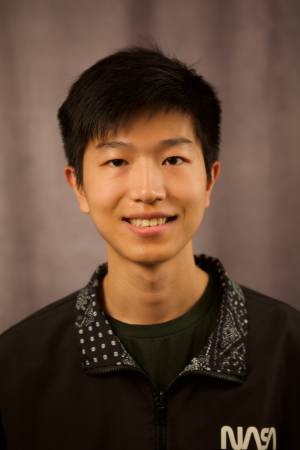
RI PhD Thesis Proposal – Wenli Xiao
Date: November 2, 2026 Time: 12:30–2:00 PM EST Type: RI PhD Thesis Proposal Zoom Link Location: NSH 4305 Title: Scalable Robot Self-Improvement through Real-World Interaction Who: Wenli Xiao Abstract: A central ambition of AGI is to build agents that can continually acquire new capabilities from their own experience. For embodied agents, this means learning through [...]

Structured Learning for Fast Physical Prediction
Abstract: Physical simulation is essential for robotics and engineering design, but remains computationally expensive, especially for complex geometries and long time horizons. Learning-based approaches offer faster predictions, but often lack the mathematical structure needed for reliable simulation. In this talk, I will present three approaches that combine learning with mathematical structure: continuous reduced-order representations for [...]

Learning in Production: Building Physical AI at Walden Robotics
Abstract: Walden Robotics is a full-stack company building both the hardware and physical AI for general-purpose manufacturing robots. Walden was founded in January 2026 and deployed its first robot into production manufacturing two months later. It’s still there and the fleet has been learning on the job ever since. Our core conviction is that the [...]

RI PhD Thesis Proposal – Philip Huang
Date: November 16, 2026 Time: 3:30-5:00PM ET Type: RI PhD Thesis Proposal Zoom Link Location: NSH 3305 Title: Towards Efficient, Versatile and Robust Multi-Arm Manipulation and Assembly Who: Philip Huang Abstract: Robotic manipulation with multiple robot arms can dramatically improve efficiency and versatility compared with a single robot arm. By scheduling and parallelizing tasks across multiple robot arms, multi-arm systems [...]

Learning Dexterous Manipulation from Grasp Priors and Force-Aware Demonstrations
Abstract: Dexterous manipulation requires coordinated finger motion, stable hand–object contact, and appropriate force application. Learning these behaviors from demonstrations is challenging because task-specific robot data is costly to collect and motion commands alone do not always produce reliable contact. This thesis studies two complementary approaches to improving the data used for dexterous policy learning: large-scale [...]

RI PhD Thesis Proposal – Hung-Jui (Joe) Huang
Date: November 20, 2026 Time: 9:30-11:00 AM ET Type: RI PhD Thesis Proposal Zoom Link Location: GHC 4303 Title: Unlocking the Power of Touch: From High-Precision Tactile Perception to Tactile-Driven Dexterous Manipulation Who: Hung-Jui (Joe) Huang Abstract: Touch plays a critical role in how we perceive and interact with the environment in everyday life. Through touch, we can feel an object's shape, sense [...]

Toward Fully Autonomous Agile Flight under Partial Observability
Abstract: This thesis explores sensing and acting as two complementary components for autonomous agile flight under partial observability. For sensing, monocular depth predictions are rescaled using sparse metric features from visual-inertial navigation, enabling collision avoidance without a prebuilt map or dedicated depth sensor. For acting, a recurrent policy is trained through a differentiable nonlinear quadrotor [...]

Harnessing environmental constraints for insect-scale robots in the real world
ABSTRACT As robots shrink, their interactions with the environment become increasingly important, with surface forces, fluid dynamics, and contact mechanics imposing significant constraints on locomotion and control. These challenges are compounded by severe limitations in onboard power, sensing, and computation, making autonomous operation in complex environments particularly difficult. Yet, the same physical interactions that constrain [...]