

12:30 pm to 2:00 pm
Newell-Simon Hall 4305

Date: November 2, 2026
Time: 12:30–2:00 PM EST
Type: RI PhD Thesis Proposal
Zoom Link
Location: NSH 4305
Title: Scalable Robot Self-Improvement through Real-World Interaction
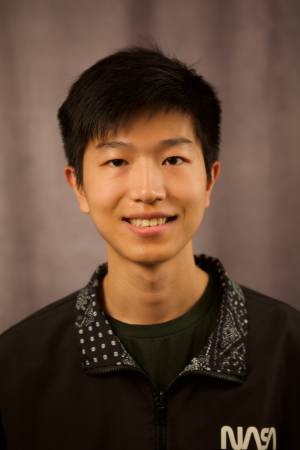
Who: Wenli Xiao
Abstract:
A central ambition of AGI is to build agents that can continually acquire new capabilities from their own experience. For embodied agents, this means learning through actions whose consequences are tested in the physical world: identifying gaps in their capabilities, seeking useful experience, and using the resulting feedback to improve. This thesis investigates how real-world interaction can support such self-improvement, and how the learning process itself can become increasingly autonomous and scalable.
I study two complementary mechanisms for learning from experience—in-context learning and post-training—and the role of agents in directing that learning. The research develops through four parts:
- Learning from Experience in Context: WoCoCo studies whole-body control conditioned on contact and task goals, providing a precursor in context-conditioned behavior. AnyCar investigates how a dynamics model can use recent state–action history to adapt its predictions across vehicles and changing conditions. This establishes a concrete form of learning from interaction during deployment.
- Turning Experience into Lasting Capability: PLD uses residual reinforcement learning to develop specialist corrections and distills their experience into a generalist policy. ASAP uses physical feedback to align simulation and improve policies through further training. These works investigate how experience can produce improvements that persist beyond the current context.
- Agentic Self-Improvement: ENPIRE enables coding agents to manage physical experiments, evaluate outcomes, and iterate on policy improvement. It takes a step toward systems that organize their own learning, with agents selecting and executing experiments to improve robot behavior.
- Scaling Self-Improvement (Proposed Work): I propose a unified autoregressive robotic model that integrates reasoning, action generation, and in-context learning, aiming for a base model that can interpret feedback and be steered toward new goals.
The proposed work will test whether these ingredients support sustained improvement over repeated learning cycles, retention of acquired capabilities, and transfer to new conditions with less human intervention. The broader goal is embodied intelligence whose capabilities grow through an increasingly self-directed cycle of interaction, learning, and discovery.
COMMITTEE MEMBERS
Guanya Shi (Chair)
Changliu Liu
Aviral Kumar
Sergey Levine, UC Berkeley