
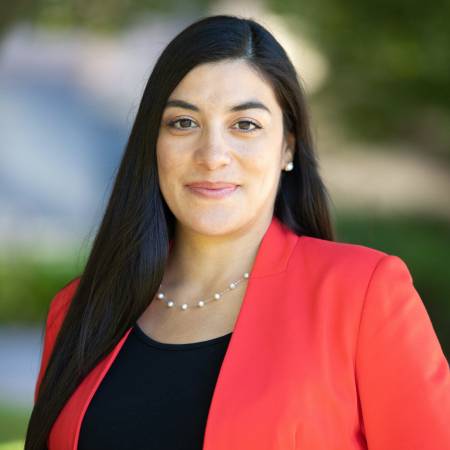
CANCELED – Trust, Sensing, and Learning for Provable Multi-Robot Performance
Seminar Canceled This seminar has been canceled and may be rescheduled for a future date. Please check back for updates. Abstract: Multi-robot systems are physically embodied networks — they sense, move, and communicate through the physical world. The bar for safe decision-making rises as these systems enter safety-critical, real-world settings where they must perform [...]
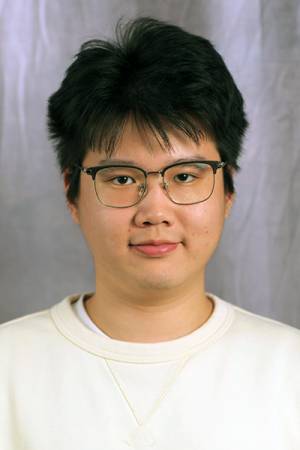
From Simulation to the Real World: A Multi-Level System for Object Navigation with Vision-Language Models
Abstract: Object navigation (ObjectNav) asks a robot to find an instance of a target object category in an unknown environment, which demands perception, spatial reasoning, and long-horizon decision making at once. Today's autonomous robots excel at mapping and moving through space yet lack high-level semantic intelligence, while vision-language models (VLMs) offer rich commonsense reasoning but [...]

Computational Lensing
Abstract: From the cameras in our phones to the lenses in head-mounted displays, optics shape both how we capture the world and how we experience virtual reality. Most conventional lenses are designed to bring a single plane into focus. In this talk, we will discuss a new class of computational lens—referred to as a Split-Lohmann [...]

Augmenting Bee Colonies with Robotics and AI Technologies for Ecosystem Support
Abstract: Earth’s ecosystems are facing a rapid decline in biodiversity, with honeybees —keystone pollinators critical to ecosystem stability— being among the most affected. The EU-funded RoboRoyale project addresses this crisis by integrating advanced robotics and AI to augment the beehive, enabling observation at unprecedented resolutions and scales. Featured on the cover of Science Robotics and [...]

Making is Decision Making
Abstract: Human creation of high-quality content requires making decisions – from coarse, high-level decisions about content and style, to precise low-level decisions about the color of an individual pixel. Modern generative AI promises to serve a collaborative assistant capable of executing design decisions specified in simple text prompts into high-quality content. Yet today’s AI systems [...]

RI PhD Thesis Defense – Ingrid Navarro Anaya
Date: September 18th, 2026 Time: 10:00 AM (ET) Zoom: link Location: NSH 4305 Type: PhD Thesis Defense Who: Ingrid Navarro Anaya Title: Towards Generalizable Motion Prediction under Distribution Shifts Abstract: Autonomous robots are increasingly expected to operate in dynamic, human-centered environments. To do so safely and efficiently, they must reason about how people move [...]

A Reactive Vibration Compensation System for Discrete Material Deposition Processes
Abstract: Ultra Large Format Deposition (ULF-D) systems perform precision material deposition over large workspaces, yet their extended and mechanically compliant structures can produce configuration-dependent vibration at the tool mounted to the robot's end-effector. In inkjet printing, vibration perturbs the deposition tool such that each discrete deposit (a single ink drop) lands displaced from its intended location on the target [...]

Decision-Making in a World of Latent Particles
Abstract: Robots must often make decisions in scenes containing many objects: they need to identify what is present, understand where objects are, predict how they will interact, and choose actions accordingly. Learning these capabilities directly from pixels is challenging, especially when the number and arrangement of objects can change from one scene to another. In [...]

RI PhD Thesis Defense – Bardienus Duisterhof
Date: 9/23/2026 Time: 2:00 PM - 4:00 PM Zoom: https://cmu.zoom.us/j/98474543738?pwd=PVQo6JfRsWvuB9eWLqbatVivVv7CTj.1 Location: NSH 4305 Type: PhD Thesis Defense Who: Bardienus Pieter Duisterhof Title: Spatiotemporal World Models for Robot Manipulation Abstract: Robot manipulation aims to automate tasks that are too dull, dirty, or dangerous for humans. This future requires remarkable resource efficiency: robots must adapt to new [...]

Adaptive Cameras: Bridging Novel Sensors and Robot Perception
Abstract: Most cameras on robots today capture images without considering scene content. In contrast, animal eyes have fast mechanical movements that control how the scene is imaged in detail by the fovea, where visual acuity is highest. The prevalence of active vision during biological imaging, and the wide variety of it, makes it very clear [...]
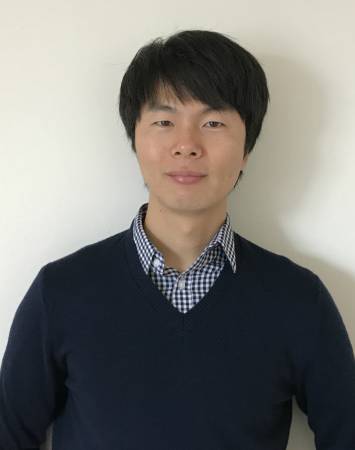
From Capturing People to Teaching Robots
Abstract: Equipping AI and robotic systems with the ability to understand human behavior is essential for enabling them to assist people across a wide range of everyday applications. This need is more pressing than ever: the heaviest consumers of such knowledge are no longer perception systems alone, but robot policies that must learn to act in [...]
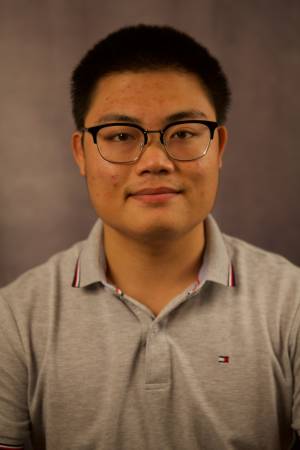
RI PhD Speaking Qual – Jianjin Xu
Date: Wednesday, Sep 30, 2026Time: 16:00 - 17:00 PMLocation: NSH 4305Zoom: https://cmu.zoom.us/j/97595860992?pwd=voNXd0zhn8HdqFakFOF3At8y0NbydV.1Title: Efficient 3D Avatar Reconstruction with Geometric Guidance Abstract:3D animatable human avatars are widely used in film making, game characters, and telepresence. To create these avatars efficiently, researchers propose to reconstruct the avatar from several input images with a feedforward network. These networks are [...]
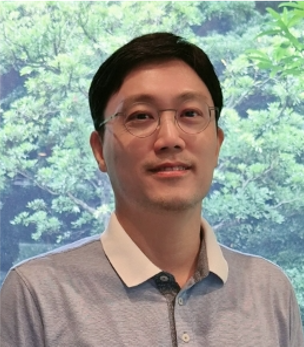
Shaping the Body of Robots with Soft Skin and Muscles
Abstract: Just as skin and muscle give living creatures their ability to sense, move, and adapt, soft sensors and actuators are giving shape to a new kind of robot body. Built from flexible, compliant materials, soft robots can closely mimic the movements of biological systems, a significant step beyond conventional rigid machines. This talk explores [...]

Video Intelligence for Understanding Behavior and Guiding Action
Abstract: Modern video-language models have become remarkably good at describing what is happening in a video. Yet their ability to understand the behavior they observe, and to act on that understanding, remains limited. This talk presents our group's work on building these missing capabilities. I will begin with foundational methods for scalable video perception, from [...]

RI PhD Thesis Proposal – Shashwat Singh
RI CALENDAR EVENT Who: Shashwat Singh Type: RI Thesis Proposal Date: Wednesday, October 7, 2026 Time: 03:30PM - 05:00PM (ET) Location: NSH 4305 Zoom link: Here Title: Extending Robot Mobility Through Mechanical Adaptation Abstract: Unstructured terrain presents diverse challenges to robot locomotion, including obstacles, deformable surfaces, and confined passages. Terrain conditions also change with time, as [...]

RI PhD Speaking Qual – Ryan Schuerkamp
Date: Friday, October 9 Time: 11:30 am – 12:30 pm Room location: GHC 4405 Zoom link: https://cmu.zoom.us/j/9873588831 Title: AdaSoS: Escaping the Exponential Cost of Higher-Order Sum-of-Squares Relaxations Abstract: Many problems in robotics, power systems, and machine learning are nonconvex polynomial optimization problems; local solvers return an answer but cannot tell you how far it is from [...]

RI Faculty Business Meeting
Meeting for RI Faculty. In person location - NSH 4305. Zoom link available via calendar invite.

How Can Robots Learn to Interact and Coordinate with Others?
Abstract: Robots in the real world rarely act alone. They share spaces with other robots and with people, and succeeding there means learning to interact and coordinate with them. This talk looks at what makes interaction hard and how we might get there. I start with multi-agent reinforcement learning, where challenges like credit assignment make coordination [...]

Global Optimization for Robotics in the Age of Learning
Abstract: Optimization is the bedrock of robotics, and robotics is a great stress test for optimization methods. High dimensionality, nonconvexity, and nonsmoothness make many robotics problems notoriously hard to solve, whether with learning-based or model-based strategies. In this talk, I will discuss our recent advances in bringing learning-based techniques together with optimization principles to address [...]
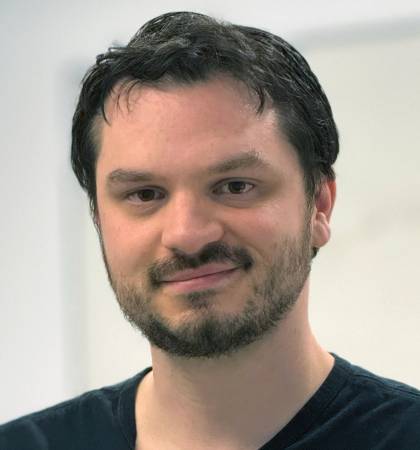
“Lawless Progress on Wicked Problems”: Shifting the Roles of Humans in Human-AI Systems
Abstract: AI is rapidly changing the roles that humans play as developers and users of new technology. In this talk, I will discuss three of those shifting roles and how my group addresses them through technical innovation and interdisciplinary design. Across these projects, understanding human roles is central to determining what systems should optimize, what [...]
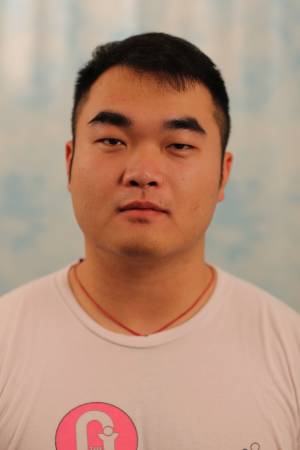
RI PhD Thesis Defense – Ruixuan Liu
Date: October 20, 2026 Time: 3:30–5:30 PM ET Type: RI PhD Thesis Defense Zoom Link Location:GHC 4405 Title: Prompt-to-Product: Towards Robots that Imagine, Reason, and Build Who: Ruixuan Liu Abstract: Recent advances in artificial intelligence (AI) and robotics have opened new possibilities for helping people turn ideas into physical assemblies. Large language models, multimodal foundation [...]

RI PhD Speaking Qualifier – Gabrielle Ohlson
Date: Wednesday, October 21 Time: 1 - 2 pm Room location: GHC 6115 Zoom link: https://cmu.zoom.us/j/97081285448?pwd=OvaBlpZG3whhrdtg3QSUP0bGPipbKW.1 Title: Designing & Evaluating Machine-Knitted Stim Objects for Autistic Adults Abstract: Stimming is a valuable coping strategy and form of expression for Autistic people. However, research has historically scrutinized stimming through a negative, corrective model. When research instead prioritizes the [...]

Simulation-Driven Robot Learning for the Lazy Researcher
Abstract: This talk will delve into the workflow of building robot learning methods powered by large-scale physics simulation. While the promise of simulation is low-effort data generation that scales cheaply with human effort, the reality is often not as simple, with considerable human effort required to actually make simulation a useful tool for real-world robotic [...]
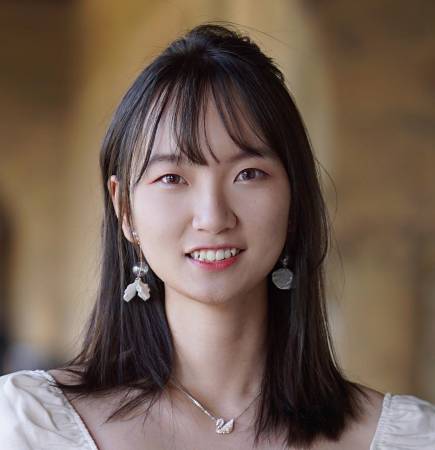
RI PhD Thesis Proposal – Yilin Wu
Date: October 26, 2026 Time: 10:00-11:30 AM ET Type: RI PhD Thesis Proposal Zoom Link Location: NSH 4305 Title: Reconciling Adaptation and Generality in Robot Policies Who: Yilin Wu Abstract: Generalist robot policies—such as vision-language-action models (VLAs)—are trained end-to-end on large observation-action datasets and can perform increasingly diverse manipulation tasks. Yet these policies remain unreliable amid the complexity [...]
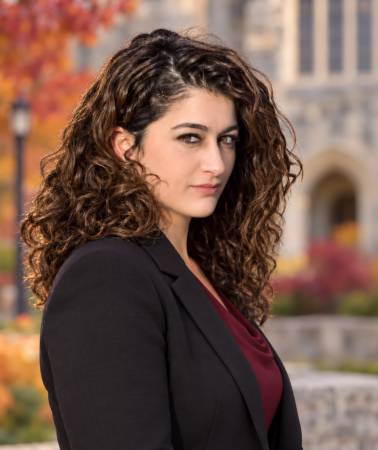
Controllable, Efficient and Personalized Generative AI: From Long-Horizon Video to Interactive World Models
Abstract: Generative models can produce compelling images and videos, yet building systems that people can reliably direct and personalize remains a fundamental challenge. These systems must support new forms of control, generate over extended horizons within practical computational budgets, and adapt to individual concepts and preferences. In this talk, I will explore these challenges through a [...]
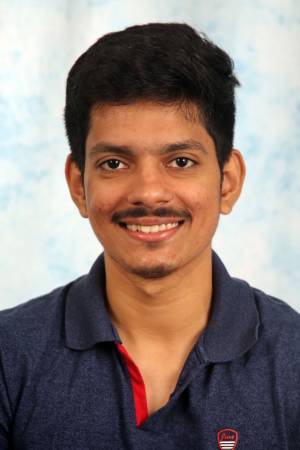
RI PhD Thesis Proposal – Sriram Narayanan
Who: Sriram Narayanan Type: RI Thesis Proposal Date: Tuesday, October 27, 2026 Time: 02:00PM - 03:30PM (ET) Location: NSH 4305 Zoom link: Here Title: Thermal Computational Imaging through Light and Heat Transport Abstract: Computer vision seeks to understand the physical world from images, yet much of this understanding remains rooted in the appearance of reflected visible light. [...]

RI PhD Thesis Proposal – Chen Wu
Date: October 28, 2026 Time: 11:00 AM -12:30 PM ET Type: RI PhD Thesis Proposal Zoom Link Location: NSH 3305 Title: Learning to Explore and Learning from Exploration for Language Models Who: Chen Wu Abstract: Learning from experience offers a way for language models to improve beyond the solutions available in their training data. Instead of relying only on demonstrations, a [...]

Expanding What Robots Can Learn in the Real World
Abstract: Two robots can be equally capable today yet very different to teach tomorrow. As foundation models expand what robots can already do, an equally important question is how to expand their learning potential: the capabilities they can acquire next with the limited experience and supervision available to them. In this talk, I will argue [...]
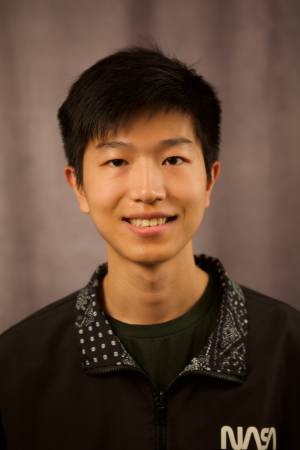
RI PhD Thesis Proposal – Wenli Xiao
Date: November 2, 2026 Time: 12:30–2:00 PM EST Type: RI PhD Thesis Proposal Zoom Link Location: NSH 4305 Title: Scalable Robot Self-Improvement through Real-World Interaction Who: Wenli Xiao Abstract: A central ambition of AGI is to build agents that can continually acquire new capabilities from their own experience. For embodied agents, this means learning through [...]

Structured Learning for Fast Physical Prediction
Abstract: Physical simulation is essential for robotics and engineering design, but remains computationally expensive, especially for complex geometries and long time horizons. Learning-based approaches offer faster predictions, but often lack the mathematical structure needed for reliable simulation. In this talk, I will present three approaches that combine learning with mathematical structure: continuous reduced-order representations for [...]

Learning in Production: Building Physical AI at Walden Robotics
Abstract: Walden Robotics is a full-stack company building both the hardware and physical AI for general-purpose manufacturing robots. Walden was founded in January 2026 and deployed its first robot into production manufacturing two months later. It’s still there and the fleet has been learning on the job ever since. Our core conviction is that the [...]
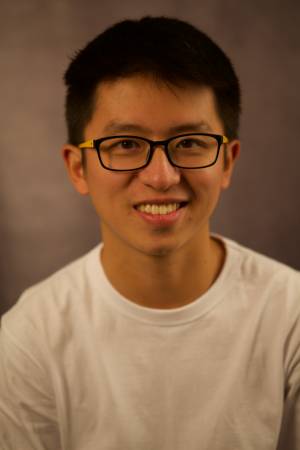
RI PhD Thesis Proposal – Philip Huang
Date: November 16, 2026 Time: 3:30-5:00PM ET Type: RI PhD Thesis Proposal Zoom Link Location: NSH 3305 Title: Towards Efficient, Versatile and Robust Multi-Arm Manipulation and Assembly Who: Philip Huang Abstract: Robotic manipulation with multiple robot arms can dramatically improve efficiency and versatility compared with a single robot arm. By scheduling and parallelizing tasks across multiple robot arms, multi-arm systems [...]