

Simulate to Learn, Learn to Simulate for Dexterous Robot Control
Abstract: Simulation enables robots to learn and evaluate behaviors at scale before real-world deployment. Yet the mismatch between simulation and the physical world remains a fundamental obstacle. This is particularly challenging for dexterous manipulation, where contact-rich interactions and dynamics variations across objects and robot embodiments are difficult to model. In my thesis research, I explore [...]

Towards Modeling GPS Noise via Raytracing
Abstract: Autonomous robot navigation relies heavily on visual-inertial state estimation, which inherently accumulates drift over extended trajectories. Fusing Global Navigation Satellite System (GNSS) signals mitigates this drift, but evaluating these systems in hardware is resource-intensive. Therefore, existing works often rely on simplified, static noise models to generate GNSS measurements. This thesis presents a raytracing-based GPS [...]

Using Sound to Steer Light and Light to Measure Sound
Abstract: Light and sound are traditionally treated as distinct physical phenomena, yet their interaction provides a powerful mechanism for manipulating and sensing information across imaging, communication, and measurement. This talk explores computational acousto-optic systems that co-design acoustics, optics, and signal processing to enable programmable control of light and high-speed optical sensing without mechanical motion. [...]

Robot Manipulation Capabilities and Grounded Task Axes
Abstract: Robots operating in open-world environments will need to understand the scope of their capabilities, recognize their limitations, and determine how those capabilities can be expanded. This talk will review research from the Intelligent Autonomous Manipulation Lab on modeling robot capabilities, allocating learning resources to expand them efficiently, and structuring skills for a given scope [...]

My Bitter Lesson with Computer Graphics
Abstract: In his essay "The Bitter Lesson," Richard Sutton argued that general methods leveraging computation ultimately outperform hand-crafted ones. In this talk, I share my own version of this lesson, learned the hard way over a decade in computer graphics. Where does the bitter lesson apply to graphics, and where does it not? I argue [...]

Scalable Vision-Language Models through Unified 2D and 3D Representations
Abstract: Vision-language models have become remarkably capable on images and short videos, yet they still struggle with two abilities central to embodied intelligence: spatial understanding and long-range temporal reasoning. A major reason is representational: today's models process videos as long sequences of 2D patches, so computation grows with observation length even when the underlying scene [...]

RI Faculty Business Meeting
Meeting for RI Faculty. In person location - NSH 4305. Zoom link available via calendar invite.
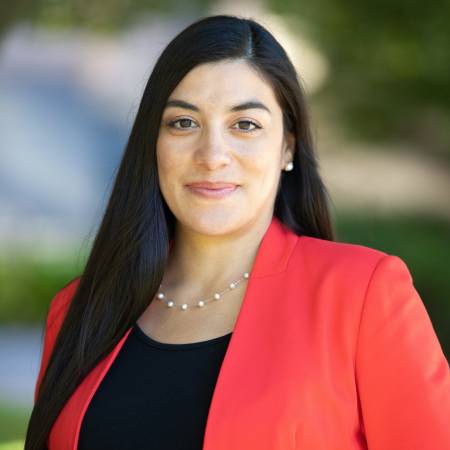
CANCELED – Trust, Sensing, and Learning for Provable Multi-Robot Performance
Seminar Canceled This seminar has been canceled and may be rescheduled for a future date. Please check back for updates. Abstract: Multi-robot systems are physically embodied networks — they sense, move, and communicate through the physical world. The bar for safe decision-making rises as these systems enter safety-critical, real-world settings where they must perform [...]

From Simulation to the Real World: A Multi-Level System for Object Navigation with Vision-Language Models
Abstract: Object navigation (ObjectNav) asks a robot to find an instance of a target object category in an unknown environment, which demands perception, spatial reasoning, and long-horizon decision making at once. Today's autonomous robots excel at mapping and moving through space yet lack high-level semantic intelligence, while vision-language models (VLMs) offer rich commonsense reasoning but [...]

Computational Lensing
Abstract: From the cameras in our phones to the lenses in head-mounted displays, optics shape both how we capture the world and how we experience virtual reality. Most conventional lenses are designed to bring a single plane into focus. In this talk, we will discuss a new class of computational lens—referred to as a Split-Lohmann [...]

Augmenting Bee Colonies with Robotics and AI Technologies for Ecosystem Support
Abstract: Earth’s ecosystems are facing a rapid decline in biodiversity, with honeybees —keystone pollinators critical to ecosystem stability— being among the most affected. The EU-funded RoboRoyale project addresses this crisis by integrating advanced robotics and AI to augment the beehive, enabling observation at unprecedented resolutions and scales. Featured on the cover of Science Robotics and [...]