
VASC Seminar

Large Multimodal (Vision-Language) Models for Image Generation and Understanding
Abstract: Large Language Models and Large Vision Models, also known as Foundation Models, have led to unprecedented advances in language understanding, visual understanding, and AI. In particular, many computer vision problems including image classification, object detection, and image generation have benefited from the capabilities of such models trained on internet-scale text and visual data. In [...]

Imaginative Vision Language Models: Towards human-level imaginative AI skills transforming species discovery, content creation, self-driving cars, and emotional health
Abstract: Most existing AI learning methods can be categorized into supervised, semi-supervised, and unsupervised methods. These approaches rely on defining empirical risks or losses on the provided labeled and/or unlabeled data. Beyond extracting learning signals from labeled/unlabeled training data, we will reflect in this talk on a class of methods that can learn beyond the vocabulary [...]
World Knowledge in the Time of Large Models
Abstract: This talk will discuss the massive shift that has come about in the vision and ML community as a result of the large pre-trained language and language and vision models such as Flamingo, GPT-4, and other models. We begin by looking at the work on knowledge-based systems in CV and robotics before the large model [...]

Digital Human Modeling with Light
Abstract: Leveraging light in various ways, we can observe and model physical phenomena or states which may not be possible to observe otherwise. In this talk, I will introduce our recent exploration on digital human modeling with different types of light. First, I will present our recent work on the modeling of relightable human heads, [...]

Dynamic 3D Gaussians: Tracking by Persistent Dynamic View Synthesis
Abstract: We present a method that simultaneously addresses the tasks of dynamic scene novel-view synthesis and six degree-of-freedom (6-DOF) tracking of all dense scene elements. We follow an analysis-by-synthesis framework, inspired by recent work that models scenes as a collection of 3D Gaussians which are optimized to reconstruct input images via differentiable rendering. To model [...]
Biometrics in a Deep Learning World
Abstract: Biometrics is the science of recognizing individuals based on their physical and behavioral attributes such as fingerprints, face, iris, voice and gait. The past decade has witnessed tremendous progress in this field, including the deployment of biometric solutions in diverse applications such as border security, national ID cards, amusement parks, access control, and smartphones. [...]

Neural World Models
Abstract: Computer vision researchers have pushed the limits of performance in perception tasks involving natural images to near saturation. With self-supervised inference driven by recent advancements in generative modeling, it can be debated that the era of large image models is coming to a close, ushering in an era focused on video. However, it's worth [...]

Reconstructing 3D Humans from Visual Data
Abstract: Abstract: Understanding humans in visual content is fundamental for numerous computer vision applications. Extensive research has been conducted in the field of human pose estimation (HPE) to accurately locate joints and construct body representations from images and videos. Expanding on HPE, human mesh recovery (HMR) addresses the more complex task of estimating the 3D pose [...]

Towards Energy-Efficient Techniques and Applications for Universal AI Implementation
Abstract: The rapid advancement of large-scale language and vision models has significantly propelled the AI domain. We now see AI enriching everyday life in numerous ways – from community and shared virtual reality experiences to autonomous vehicles, healthcare innovations, and accessibility technologies, among others. Central to these developments is the real-time implementation of high-quality deep [...]
Structure-from-Motion Meets Self-supervised Learning
Abstract: How to teach machine to perceive 3D world from unlabeled videos? We will present new solution via incorporating Structure-from-Motion (SfM) into self-supervised model learning. Given RGB inputs, deep models learn to regress depth and correspondence. With the two inputs, we introduce a camera localization algorithm that searches for certified global optimal poses. However, the [...]

Toward Human-Centered XR: Bridging Cognition and Computation
Abstract: Virtual and Augmented Reality enables unprecedented possibilities for displaying virtual content, sensing physical surroundings, and tracking human behaviors with high fidelity. However, we still haven't created "superhumans" who can outperform what we are in physical reality, nor a "perfect" XR system that delivers infinite battery life or realistic sensation. In this talk, I will discuss some of our [...]

Zeros for Data Science
Abstract: The world around us is neither totally regular nor completely random. Our and robots’ reliance on spatiotemporal patterns in daily life cannot be over-stressed, given the fact that most of us can function (perceive, recognize, navigate) effectively in chaotic and previously unseen physical, social and digital worlds. Data science has been promoted and practiced [...]

Emotion perception: progress, challenges, and use cases
Abstract: One of the challenges Human-Centric AI systems face is understanding human behavior and emotions considering the context in which they take place. For example, current computer vision approaches for recognizing human emotions usually focus on facial movements and often ignore the context in which the facial movements take place. In this presentation, I will [...]
Foundation Models for Robotic Manipulation: Opportunities and Challenges
Abstract: Foundation models, such as GPT-4 Vision, have marked significant achievements in the fields of natural language and vision, demonstrating exceptional abilities to adapt to new tasks and scenarios. However, physical interaction—such as cooking, cleaning, or caregiving—remains a frontier where foundation models and robotic systems have yet to achieve the desired level of adaptability and [...]

Imitating Shortest Paths in Simulation Enables Effective Navigation and Manipulation in the Real World
Abstract: We show that imitating shortest-path planners in simulation produces Stretch RE-1 robotic agents that, given language instructions, can proficiently navigate, explore, and manipulate objects in both simulation and in the real world using only RGB sensors (no depth maps or GPS coordinates). This surprising result is enabled by our end-to-end, transformer-based, SPOC architecture, powerful [...]

Creating robust deep learning models involves effectively managing nuisance variables
Abstract: Over the past decade, we have witnessed significant advances in capabilities of deep neural network models in vision and machine learning. However, issues related to bias, discrimination, and fairness in general, have received a great deal of negative attention (e.g., mistakes in surveillance and animal-human confusion of vision models). But bias in AI models [...]
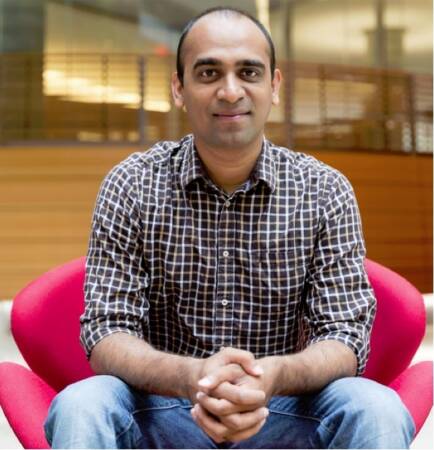
Shedding Light on 3D Cameras
Abstract: The advent (and commoditization) of low-cost 3D cameras is revolutionizing many application domains, including robotics, autonomous navigation, human computer interfaces, and recently even consumer devices such as cell-phones. Most modern 3D cameras (e.g., LiDAR) are active; they consist of a light source that emits coded light into the scene, i.e., its intensity is modulated over [...]

Neural Field Representations of Mobile Computational Photography
Abstract: Burst imaging pipelines allow cellphones to compensate for less-than-ideal optical and sensor hardware by computationally merging multiple lower-quality images into a single high-quality output. The main challenge for these pipelines is compensating for pixel motion, estimating how to align and merge measurements across time while the user's natural hand tremor involuntarily shakes the camera. In [...]

Passive Ultra-Wideband Single-Photon Imaging
Abstract: High-speed light sources, fast cameras, and depth sensors have made it possible to image dynamic phenomena occurring in ever smaller time intervals with the help of actively-controlled light sources and synchronization. Unfortunately, while these techniques do capture ultrafast events, they cannot simultaneously capture slower ones too. I will discuss our recent work on passive ultra-wideband [...]
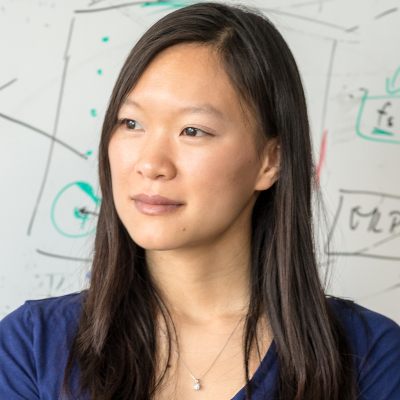
From Understanding to Interacting with the 3D World
Abstract: Understanding the 3D structure of real-world environments is a fundamental challenge in machine perception, critical for applications spanning robotic navigation, content creation, and mixed reality scenarios. In recent years, machine learning has undergone rapid advancements; however, in the 3D domain, such data-driven learning is often very challenging under limited 3D/4D data availability. In this talk, [...]

Learned Imaging Systems
Abstract: Computational imaging systems are based on the joint design of optics and associated image reconstruction algorithms. Of particular interest in recent years has been the development of end-to-end learned “Deep Optics” systems that use differentiable optical simulation in combination with backpropagation to simultaneously learn optical design and deep network post-processing for applications such as hyperspectral [...]
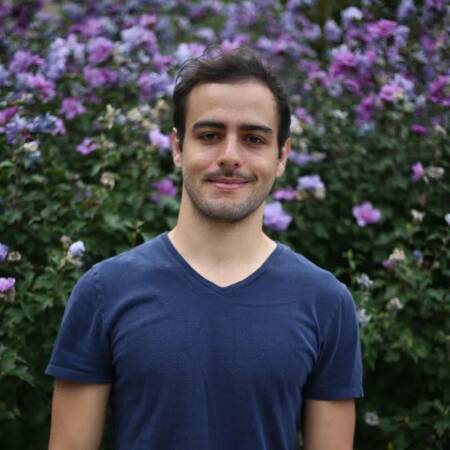
Unlocking Magic: Personalization of Diffusion Models for Novel Applications
Abstract: Since the recent advent of text-to-image diffusion models for high-quality realistic image generation, a plethora of creative applications have suddenly become within reach. I will present my work at Google where I have attempted to unlock magical applications by proposing simple techniques that act on these large text-to-image diffusion models. Particularly, a large class of [...]

Instant Visual 3D Worlds Through Split-Lohmann Displays
Abstract: Split-Lohmann displays provide a novel approach to creating instant visual 3D worlds that support realistic eye accommodation. Unlike commercially available VR headsets that show content at a fixed depth, the proposed display can optically place each pixel region to a different depth, instantly creating eye-tracking-free 3D worlds without using time-multiplexing. This enables real-time streaming [...]

Remote Rendering and 3D Streaming for Resource-Constrained XR Devices
Abstract: An overview of the motivation and challenges for remote rendering and real-time 3D video streaming on XR headsets. Bio: Edward is a third year PhD student in the ECE department interested in computer systems for VR/AR devices. Homepage: https://users.ece.cmu.edu/~elu2/ Sponsored in part by: Meta Reality Labs Pittsburgh

Vectorizing Raster Signals for Spatial Intelligence
Abstract: This seminar will focus on how vectorized representations can be generated from raster signals to enhance spatial intelligence. I will discuss the core methodology behind this transformation, with a focus on applications in AR/VR and robotics. The seminar will also briefly cover follow-up work that explores rigging and re-animating objects from casual single videos [...]

Stochastic Graphics Primitives
Abstract: For decades computer graphics has successfully leveraged stochasticity to enable both expressive volumetric representations of participating media like clouds and efficient Monte Carlo rendering of large scale, complex scenes. In this talk, we’ll explore how these complementary forms of stochasticity (representational and algorithmic) may be applied more generally across computer graphics and vision. In [...]

Reconstructing Everything
Abstract: The presentation will be about a long-running, perhaps quixotic effort to reconstruct all of the world's structures in 3D from Internet photos, why this is challenging, and why this effort might be useful in the era of generative AI. Bio: Noah Snavely is a Professor in the Computer Science Department at Cornell University [...]

High-Fidelity Neural Radiance Fields
Abstract: I will present three recent projects that focus on high-fidelity neural radiance fields for walkable VR spaces: VR-NeRF (SIGGRAPH Asia 2023) is an end-to-end system for the high-fidelity capture, model reconstruction, and real-time rendering of walkable spaces in virtual reality using neural radiance fields. To this end, we designed and built a custom multi-camera rig to [...]

Building Scalable Visual Intelligence: From Represention to Understanding and Generation
Abstract: In this talk, we will dive into our recent work on vision-centric generative AI, focusing on how it helps with understanding and creating visual content like images and videos. We'll cover the latest advances, including multimodal large language models for visual understanding and diffusion transformers for visual generation. We'll explore how these two areas [...]

Sparse-view Pose Estimation and Reconstruction via Analysis by Generative Synthesis
Abstract: This talk will present our approach for reconstructing objects from sparse-view images captured in unconstrained environments. In the absence of ground-truth camera poses, we will demonstrate how to utilize estimates from off-the-shelf systems and address two key challenges: refining noisy camera poses in sparse views and effectively handling outlier poses. Bio: Qitao is a second-year [...]

EgoTouch: On-Body Touch Input Using AR/VR Headset Cameras
Abstract: In augmented and virtual reality (AR/VR) experiences, a user’s arms and hands can provide a convenient and tactile surface for touch input. Prior work has shown on-body input to have significant speed, accuracy, and ergonomic benefits over in-air interfaces, which are common today. In this work, we demonstrate high accuracy, bare hands (i.e., no special [...]

Auptimize: Optimal Placement of Spatial Audio Cues for Extended Reality
Abstract: Spatial audio in Extended Reality (XR) provides users with better awareness of where virtual elements are placed, and efficiently guides them to events such as notifications, system alerts from different windows, or approaching avatars. Humans, however, are inaccurate in localizing sound cues, especially with multiple sources due to limitations in human auditory perception such as [...]

Generative Modelling for 3D Multimodal Understanding of Human Physical Interactions
Abstract: Generative modelling has been extremely successful in synthesizing text, images, and videos. Can the same machinery also help us better understand how to physically interact with the multimodal 3D world? In this talk, I will introduce some of my group's work in answering this question. I will first discuss how we can enable 2D [...]

High-resolution cloth simulation in milliseconds: Efficient GPU Cloth Simulation with Non-distance Barriers and Subspace Reuse Interactions
Abstract: We show how to push the performance of high-resolution cloth simulation, making the simulation interactive (in milliseconds) for models with one million degrees of freedom (DOFs) while keeping every triangle untangled. The guarantee of being penetration-free is inspired by the interior-point method, which converts the inequality constraints to barrier potentials. Nevertheless, we propose a [...]
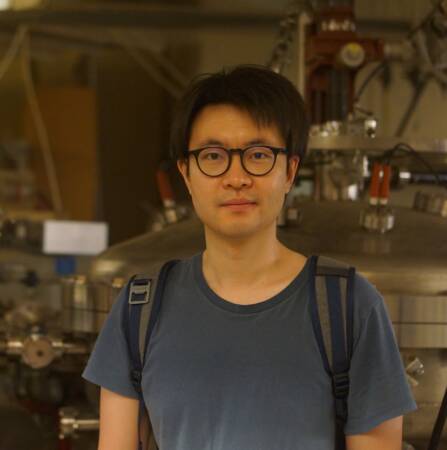
Practical Challenges and Recent Advances in Data Attribution
Abstract: Data plays an increasingly crucial role in both the performance and the safety of AI models. Data attribution is an emerging family of techniques aimed at quantifying the impact of individual training data points on a model trained on them, which has found data-centric applications such as training data curation, instance-based explanation, and copyright [...]

Controllable Visual Imagination
Abstract: Generative models have empowered human creators to visualize their imaginations without artistic skills and labor. A prominent example is large-scale text-to-image generation models. However, these models often are difficult to control and do not respect 3D perspective geometry and temporal consistency of videos. In this talk, I will showcase several of our recent efforts to [...]

Discovering and Erasing Undesired Concepts
Abstract: The rapid growth of generative models allows an ever-increasing variety of capabilities. Yet, these models may also produce undesired content such as unsafe or misleading images, private information, or copyrighted material. In this talk, I will discuss practical methods to prevent undesired generations. First, I will show how the challenge of avoiding undesired generations [...]

The New Era of Video Generation
Abstract: Traditional video production is slow, expensive, and requires specialized skills. Founded by CMU alumni, HeyGen is an AI-native video platform designed to revolutionize the video creation process by making visual storytelling accessible to all. We've successfully grown to more than 20M users, and tens of millions revenue in less than one year, with recognition [...]

Autoregressive Models: Foundations and Open Questions
Abstract: The success of Autoregressive (AR) models in language today is so tremendous that their scope has, in turn, been largely narrowed to specific instantiations. In this talk, we will revisit the foundations of classical AR models, discussing essential concepts that may have been overlooked in modern practice. We will then introduce our recent research [...]

Generating a Physical World
Abstract: Generating an interactive, enlivened, and physical world enables a wide range of applications in entertainment, embodied AI, education, and creative designs. Recent image/video models have shown promise in producing realistic visuals, yet they operate purely at the pixel level and lack underlying physical grounding, leading to failures in physical fidelity and user interactivity. In [...]

When Spatial Computing meets Accelerated Computing
Abstract: NVIDIA has been pioneering Accelerated Computing for the past three decades, driving innovations that have transformed society. Among all personal computing mediums, Spatial Computing and Extended Reality (XR) stand out as some of the most promising beneficiaries of accelerated computing. In this talk, we will explore the latest developments and trends in the XR ecosystem, [...]

Whole-Body Conditioned Egocentric Video Prediction
Abstract: We train models to Predict Ego-centric Video from human Actions (PEVA), given the past video and an action represented by the relative 3D body pose. By conditioning on kinematic pose trajectories, structured by the joint hierarchy of the body, our model learns to simulate how physical human actions shape the environment from a first-person [...]

From Sparse to Dense, and Back to Sparse Again?
Abstract: Computer vision architectures used to be built on a sparse sample of points in the 80s and 90s. In the 2000s, dense models started to become popular for visual recognition as heuristically defined sparse models do not cover all the important parts of an image. However, with deep learning and end-to-end training approaches, this does [...]
Seeing Deep Inside Scattering Tissue Using Efficient, Noise-Robust Wavefront Shaping
Abstract: Scattering limits our ability to see inside biological tissue, as light penetration is severely distorted by tissue components with varying refractive indices. One promising method to overcome scattering aberration is wavefront shaping. This technique involves placing a spatial light modulator (SLM) in the microscope's optical path to correct the wavefront emitted from a point [...]

From Video Generation to Video World Models
Abstract: Video diffusion models have achieved remarkable success in content creation, yet they still fall short of simulating interactive worlds that respond to users in real time. This talk examines the fundamental challenges preventing these models from evolving into true world simulators. I will present a series of works — CausVid, Self-Forcing, MotionStream, and State-Space [...]

What Can We Learn from a Million Models?
Abstract: Machine learning has transformed many fields by learning from large collections of data. Yet, it is rarely applied to its own outputs: the models themselves. Today, with millions of publicly available models, a natural question arises: what can we do with so many models? In this talk, I will motivate two core applications that [...]

Should we skip attention?
Abstract: Transformers are ubiquitous. They influence nearly every aspect of modern AI. However, the mechanics of their training remain poorly understood. This poses a problem for the field due to the immense amounts of data, computational power, and energy being invested in the training of these networks. I highlight a recent intriguing empirical result from [...]

From Lab to Reality: Reliable 3D Vision in the Wild
VIRTUAL SEMINAR Abstract: While deep learning has revolutionized 3D computer vision, a significant gap remains between the performance achieved in controlled laboratory settings and that in complex, uncontrolled real-world environments. This talk addresses the critical challenges of robustness and generalization required to bridge this gap. In this presentation, I will first discuss our contributions to 3D [...]

Nano-optics for smart sensing and display
Abstract: Nano-optical devices provide a new way to control light at the subwavelength scale, enabling optical functionalities beyond conventional optics. By engineering the nanostructures, we can tailor the optical response as a function of space, polarization, wavelength, and angle of incidence -- effectively turning the optical front end into a controllable, programmable physical layer. This [...]

Generative Re-Photography with Video Models
Abstract: I will introduce "generative re-photography" methods that use new generative video models to get more out of your photos—even the blurry ones. First, I will present a method for converting motion-blurred images to video. This method can even predict the "past" and "future" (right before and after the capture) of a motion-blurred image. I will [...]
Learning Through Fitting: Advancing Non-Pixel Representations for Visual Inference
Abstract: Gridded pixel and voxel representations form the backbone of visual computing, but they struggle to scale efficiently to large, high-dimensional data, such as volumetric medical scans and complex scientific simulations. Consequently, continuous, nongridded models such as implicit neural representations (INRs) and Gaussian splatting have gained significant research traction over the past five years. However, [...]

Quanta Perception as Probabilistic Events
Abstract: Autonomous systems ultimately rely on extracting information from light, yet remain brittle in extreme environments, from nighttime navigation to high-speed robotics. This limitation stems from a classical imaging abstraction: conventional sensors integrate photon flux over fixed exposure windows, imposing trade-offs between sensitivity, dynamic range, and temporal resolution that degrade perception when photons are scarce [...]