
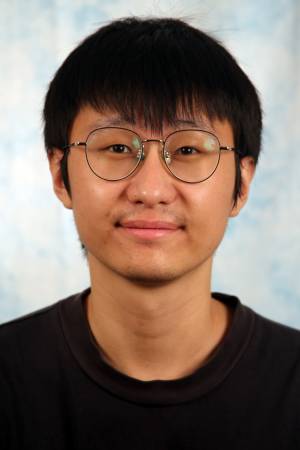
Learning Dynamic and Competitive Human Skills and Strategies for Animation and Robotics
Abstract: Humanoid control in animation and robotics requires physically realistic motion as well as the ability to adapt, coordinate actions over time, and make decisions in response to changing environments and other agents. Human motion data provides a powerful source of prior knowledge for learning natural and stable movement, but many existing approaches rely on [...]

Robots as Models for Biology and Biology and Materials for Robots
Abstract: In the last century, it was common to envision robots as shining metal structures with rigid and halting motion. This imagery is in contrast to the fluid and organic motion of living organisms that inhabit our natural world. The adaptability, complex control, and advanced learning capabilities observed in animals are not yet fully understood, [...]

Advancing Spacecraft Autonomy: Optimal GNC, Vision-Based Estimation, and Systems Integration for Small Spacecraft
Abstract : Small spacecraft are increasingly expected to perform complex missions despite strict constraints in mass, power, and onboard computation. Meeting these demands requires advances in autonomy that enable effective decision-making, adaptive control, and robust state estimation within resource-limited platforms. This thesis develops optimization- and machine-learning–based methods to improve spacecraft autonomy across guidance, navigation, and [...]
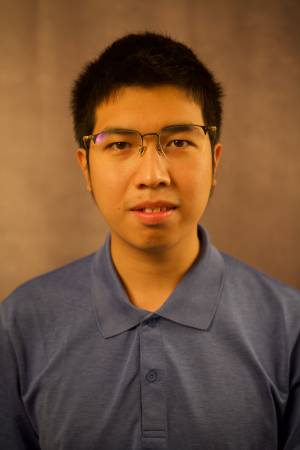
UFM: A Simple Path towards Unified Dense Correspondence with Flow
Abstract: Dense image correspondence is central to many applications, such as visual odometry, 3D reconstruction, object association, and re-identification. Historically, dense correspondence has been tackled separately for wide-baseline scenarios and optical flow estimation, despite the common goal of matching content between two images. In this talk, we develop a Unified Flow & Matching model (UFM), which [...]