
Seminar

Physical Intelligence for Physical Care: Towards Stakeholder-Informed Caregiving Robots in the Real World
Abstract: How can we build robots that meaningfully assist people with mobility limitations in their daily lives? To support complex caregiving tasks such as robot-assisted feeding, bathing, transferring, and meal preparation, robots must physically interact with people and objects in dynamic, unstructured environments while maintaining safety. In this talk, I will present an overview of [...]

Video-informed Pose Spaces for Auto-Rigged Meshes
Abstract: Kinematic rigs make 3D meshes editable, but they do not specify which poses are plausible for a given asset. As a result, naively manipulating rig parameters can easily produce unrealistic deformations. Artists often address this by manually authoring pose spaces, but doing so requires substantial effort and expertise. In this talk, I will first give [...]

Title: Geometric Perspectives in AI
Abstract: Geometry can make AI approaches more accurate, efficient and controllable. In this talk, we cover three contributions that demonstrate this. The first is DeltaConv, a building block for CNNs on curved surfaces. DeltaConv works directly on the surface, rather than in 3D space. That means the networks can be more efficient and robust to deformations [...]

Generative Re-Photography with Video Models
Abstract: I will introduce "generative re-photography" methods that use new generative video models to get more out of your photos—even the blurry ones. First, I will present a method for converting motion-blurred images to video. This method can even predict the "past" and "future" (right before and after the capture) of a motion-blurred image. I will [...]

The Role of Rationality in Modern Robotics
Abstract: The classical approach to AI designed systems that were rational at run-time: they had explicit representations of beliefs, goals, and plans and ran inference algorithms, online, to select actions. The rational approach was criticized (by the behaviorists) and modified (by the probabilists) but persisted in some form. More recently, relatively unstructured data-driven end-to-end approaches [...]
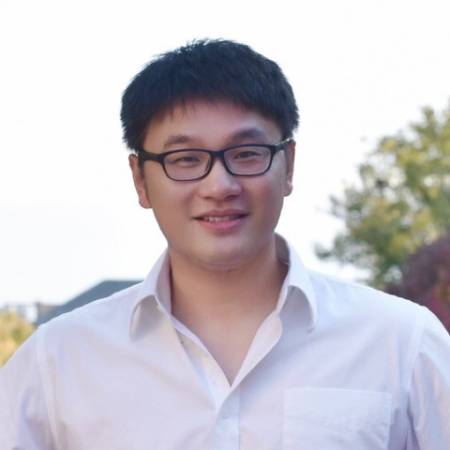
The AI That Sees Cancer Coming
Abstract: Cancer rarely announces itself. It hints. It hides. Radiologists often describe their work as looking for needles in a haystack. By the time we are certain, it is often too late. Artificial intelligence (AI) offers a fundamentally new approach to this problem. By learning complex statistical patterns from large collections of medical images and clinical [...]
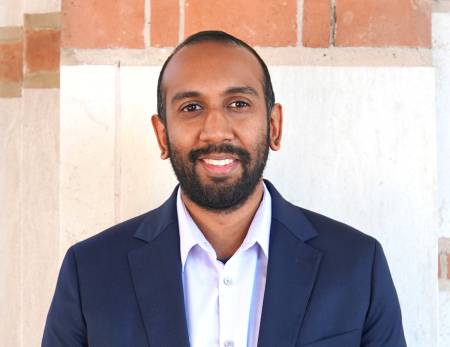
Learning Through Fitting: Advancing Non-Pixel Representations for Visual Inference
Abstract: Gridded pixel and voxel representations form the backbone of visual computing, but they struggle to scale efficiently to large, high-dimensional data, such as volumetric medical scans and complex scientific simulations. Consequently, continuous, nongridded models such as implicit neural representations (INRs) and Gaussian splatting have gained significant research traction over the past five years. However, [...]

Quanta Perception as Probabilistic Events
Abstract: Autonomous systems ultimately rely on extracting information from light, yet remain brittle in extreme environments, from nighttime navigation to high-speed robotics. This limitation stems from a classical imaging abstraction: conventional sensors integrate photon flux over fixed exposure windows, imposing trade-offs between sensitivity, dynamic range, and temporal resolution that degrade perception when photons are scarce [...]

Cutting the Skip: Training Residual-Free Transformers
Abstract: Transformers are ubiquitous. They influence nearly every aspect of modern AI. However, the mechanics of their training remain poorly understood. This poses a problem for the field due to the immense amounts of data, computational power, and energy being invested in the training of these networks. I highlight a recent intriguing empirical result from [...]

Using Sound to Steer Light and Light to Measure Sound
Abstract: Light and sound are traditionally treated as distinct physical phenomena, yet their interaction provides a powerful mechanism for manipulating and sensing information across imaging, communication, and measurement. This talk explores computational acousto-optic systems that co-design acoustics, optics, and signal processing to enable programmable control of light and high-speed optical sensing without mechanical motion. [...]