
Field Robotics Center Seminar

Carnegie Mellon University
Wire Detection, Reconstruction, and Avoidance for Unmanned Aerial Vehicles
Abstract Thin objects, such as wires and power lines are one of the most challenging obstacles to detect and avoid for UAVs, and are a cause of numerous accidents each year. This thesis makes contributions in three areas of this domain: wire segmentation, reconstruction, and avoidance. Pixelwise wire detection can be framed as a binary [...]

Carnegie Mellon University
Toward Invariant Visual Inertial State Estimation using Information Sparsification
Abstract In this work, we address two current challenges in real-time visual-inertial odometry (VIO) systems - efficiency and accuracy. To this end, we present a novel approach to tightly couple visual and inertial measurements in a fixed-lag VIO framework using information sparsification. To bound computational complexity, fixed-lag smoothers perform marginalization of variables but consequently deteriorate accuracy and [...]

Carnegie Mellon University
Autonomous drone cinematographer: Using artistic principles to create smooth, safe, occlusion-free trajectories for aerial filming
Abstract: Autonomous aerial cinematography has the potential to enable automatic capture of aesthetically pleasing videos without requiring human intervention, empowering individuals with the capability of high-end film studios. Current approaches either only handle off-line trajectory generation, or offer strategies that reason over short time horizons and simplistic representations for obstacles, which result in jerky movement and [...]

Visual SLAM with Semantic Scene understanding
Abstract: Simultaneous localization and mapping (SLAM) has been widely used in autonomous robots and virtual reality. It estimates the sensor motion and maps the environment at the same time. The classic sparse feature point map of visual SLAM is limited for many advanced tasks including robot navigation and interactions, which usually require a high-level understanding of [...]

Carnegie Mellon University
Toward intuitive human controlled MAVs: motion primitives based teleoperation
Abstract: Humans excel at composing high-level plans that achieve a complex, multimodal objective; however, achieving proficiency in teleoperating multi-rotor aerial vehicles (MAVs) in unstructured environments with stability and safety requires significant skill and training. In this talk, we present human-in-the-loop control of a MAV via teleoperation using motion primitives that addresses these concerns. We show [...]

Carnegie Mellon University
Improving Multirotor Trajectory Tracking Performance using Learned Dynamics Models
Abstract: Multirotors and other aerial vehicles have recently seen a surge in popularity, partly due to a rise in industrial applications such as inspection, surveillance, exploration, package delivery, cinematography, and others. Crucial to multirotors' successes in these applications, and enabling their suitability for other applications, is the ability to accurately track trajectories at high speed [...]

Carnegie Mellon University
Automatic Real-time Anomaly Detection for Autonomous Aerial Vehicles
Abstract: The recent incidents with Boeing 737 Max 8 aircraft have raised concerns about the safety and reliability of autopilots and autonomous operations. There is a growing need for methods to monitor the status of aircraft and report any faults and anomalies to the human pilot or to the autopilot to deal with the emergency [...]

Event Cameras: Image Reconstruction, Convolutions and Color
Abstract: Event cameras are novel, bio-inspired visual sensors, whose pixels output asynchronous and independent timestamped spikes at local intensity changes, called ‘events’. Event cameras offer advantages over conventional frame-based cameras in terms of latency, high dynamic range (HDR) and temporal resolution. Event cameras do not output conventional image frames, thus, image reconstruction from events enables [...]

From Farm to Takeoff: Ground and Aerial Robots for Biological Systems Analysis
Abstract: Biological and agricultural environments are dynamic, unstructured, and uncertain, posing challenges for environmental data collection at the necessary spatial and temporal scales to enable meaningful systems analysis. Small unmanned systems, however, can overcome some of these challenges by enabling autonomous or human-assisted image-based and in situ environmental data collection. This talk will present a suite of [...]

AI in Space – From Earth Orbit to Mars and Beyond!
Abstract: Artificial Intelligence is playing an increasing role in our everyday lives and the business marketplace. This trend extends to the space sector, where AI has already shown considerable success and has the potential to revolutionize almost every aspect of space exploration. We first highlight a number of success stories of the tremendous impact of [...]

Carnegie Mellon University
Self-Supervised Learning on Mobile Robots Using Acoustics, Vibration, and Visual Models to Build Rich Semantic Terrain Maps
Abstract: Humans and robots would benefit from having rich semantic maps of the terrain in which they operate. Mobile robots equipped with sensors and perception software could build such maps as they navigate through a new environment. This information could then be used by humans or robots for better localization and path planning, as well [...]

Multiple Drone Vision and Cinematography
Abstract: The aim of drone cinematography is to develop innovative intelligent single- and multiple-drone platforms for media production to cover outdoor events (e.g., sports) that are typically distributed over large expanses, ranging, for example, from a stadium to an entire city. The drone or drone team, to be managed by the production director and his/her [...]

Tartan AUV: A Dive into Carnegie Mellon’s RoboSub Team
Abstract: Founded last year, Tartan AUV is Carnegie Mellon’s undergraduate underwater robotics team which competes annually in the RoboSub competition. RoboSub teams must design, build, and test autonomous underwater vehicles that compete each August to complete tasks related to underwater navigation, object detection and manipulation, and acoustic beacon localization. In this talk we will provide [...]

Beyond ROS: Using a Data Connectivity Framework to build and run Autonomous Systems
Virtual FRC Seminar: Seminar recording: https://cmu.zoom.us/rec/share/x84qF7_q8TlIcpHoyG_DRa58O6i8aaa8hCAW_fEPxEkBGjBVPyzW_lK0YW30RfJ3?startTime=1598551489000 Passcode: qu6)ePH9 Abstract: Next-generation robotics will need more than the current ROS code in order to comply with the interoperability, security and scalability requirements for commercial deployments. This session will provide a technical overview of ROS, ROS2 and the Data Distribution Service™ (DDS) protocol for data connectivity in safety-critical cyber-physical [...]

Towards more effective remote execution of exploration operations using multimodal interfaces
Abstract: Remote robots enable humans to explore and interact with environments while keeping them safe from existing harsh conditions (e.g., in search and rescue, deep sea or planetary exploration scenarios). However, the gap between the control station and the remote robot presents several challenges (e.g., situation awareness, cognitive load, perception, latency) for effective teleoperation. Multimodal [...]

Multi-Sensor Robot Navigation and Subterranean Exploration

Autonomous mobility in Mars exploration: recent achievements and future prospects
Abstract: This talk will summarize key recent advances in autonomous surface and aerial mobility for Mars exploration, then discuss potential future missions and technology needs for Mars and other planetary bodies. Among recent advances, the Perseverance rover that is now operating on Mars includes new autonomous navigation capability that dramatically increases its traverse speed over [...]
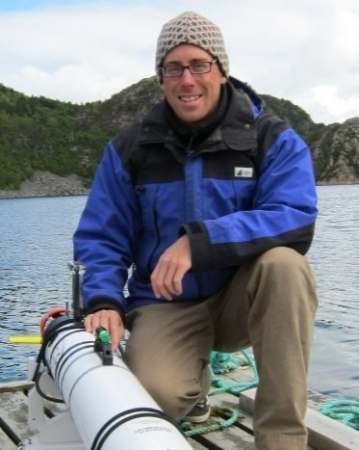
Robots Crossing Boundaries
Abstract: Over the last 50 years, autonomous robots have made the leap from being novel research contributions in university labs to becoming the fundamental technology upon which companies are built. While they traditionally have belonged to the engineering and computer science disciplines, robots have now crossed into other areas of study and research - making impacts in oceanography, geology, archaeology, biomechanics and biology. [...]

Using Robotics, Imaging and AI to Tackle Apple Fruit Production: Crop Harvest and Fire Blight Disease, The Two Major Bottlenecks for U.S. Apple Producers
Abstract Temperate tree fruit production is a significant agricultural sector in the United States, encompassing a variety of fruits like apples, pears, cherries, peaches and plums. The U.S. is the second-largest producer of apples in the world, after China. Annual U.S. production is 10 - 11 billion pounds of apple. However, apple production is complicated [...]

A retrospective, 40 Years of Field Robotics
Abstract: Chuck has been building and deploying robots in the field for the past 40 years. In this retrospective he will touch on the robots, people and experiences that have been part of the journey. From the early days in the 1980s with the Three Mile Island nuclear robots and the first outdoor autonomy robots [...]

From Lab to Launch
Bio: Nathan Michael is Shield AI’s Chief Technology Officer and a former Associate Research Professor in the Robotics Institute of Carnegie Mellon University (CMU). At CMU, Nathan was the Director of the Resilient Intelligent Systems Lab, a research lab dedicated to improving the performance and reliability of artificially intelligent and autonomous systems that operate in [...]