

Tuesday, April 14
12:15 pm to 1:45 pm
Newell-Simon Hall 3305

12:15 pm to 1:45 pm
Newell-Simon Hall 3305
RI PhD Thesis Defense – Rishi Veerapaneni
Date: April 14th, 2026
Time: 12:15 PM (ET)
Location: NSH 3305
Zoom Link
Type: Ph.D. Thesis Defense
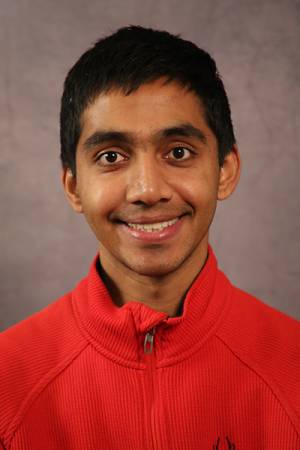
Who: Rishi Veerapaneni
Title: Efficient Multi-Agent Motion Planning using Local Policies
Time: 12:15 PM (ET)
Location: NSH 3305
Zoom Link
Type: Ph.D. Thesis Defense
Who: Rishi Veerapaneni
Title: Efficient Multi-Agent Motion Planning using Local Policies
Abstract:
My thesis is motivated by a future full of multi-agent systems: robots running warehouses, humanoids constructing buildings, aerial and ground robots delivering packages in urban environments, and autonomous rovers collaborating on the moon. One core problem in these multi-robot teams is effective multi-agent motion planning; robots in teams need to be able to efficiently find collision-free paths in order to complete their tasks. Multi-agent motion planning is challenging as agents may need to act non-greedily and as the number of possible solutions grows exponentially with the number of agents.
Multi-Agent Path Finding (MAPF) is a subset of multi-agent motion planning that typically focuses on simple planar robots but can be generalized to other robot systems. The majority of modern MAPF methods compute complete start-goal (global) paths. However computing partial (local) paths offers several advantages including faster planning, adaptability to changes, and compatibility with decentralized systems. Additionally, local planning makes it easier to incorporate machine learning as it makes the prediction problems more tractable and reduces data collection requirements. Despite these benefits, local planning is challenging as it is likely to get stuck in livelock or deadlock. Thus, the main objective of my thesis is to effectively solve global multi-agent motion planning leveraging local policies, learned or planned, while avoiding the typical pitfalls of local reasoning.
The first part of this talk will focus on demonstrating how augmenting local ML policies with heuristic search can dramatically improve scalability compared to just ML policies by themselves. The second part of the talk will describe different approaches for maintaining solution guarantees (i.e., not getting stuck in deadlock) with partial planning, including using a learned ML policy. My last part of my talk will focus on generalizing MAPF techniques to robots running heterogeneous/independent motion planners (e.g., A*, RRT, optimization, diffusion, and RL) and can enable coordinating a team of quadruped robots.
Thesis Committee Members:
Maxim Likhachev (co-chair)
Jiaoyang Li (co-chair)
Guanya Shi
Mac Schwager (Stanford)
Vijay Kumar (University of Pennsylvania)
Jiaoyang Li (co-chair)
Guanya Shi
Mac Schwager (Stanford)
Vijay Kumar (University of Pennsylvania)