
The Teruko Yata Memorial Lecture in Robotics
Journeys from Research to Commercialization: Lessons from Anki, Waymo, and Bedrock Robotics

12:00 pm – 1:00 pm
Gates-Hillman Center 4401
Boris Sofman (Carnegie Mellon Robotics Institute, PhD, 2010) has experienced many stages of the company-building journey in robotics: founding startups from scratch, scaling products to mass market, and operating within one of the world’s most ambitious and expensive technology programs. At Anki, he took an idea from prototype to millions of consumer robots in homes around the world. At Waymo, he was part of the leadership team during the inflection point from a decade of R&D into one of the most dramatic commercial adoptions in tech history. Now, at Bedrock Robotics, he’s bringing autonomous systems to 50-ton construction machines to help America build infrastructure at an unprecedented speed and scale.
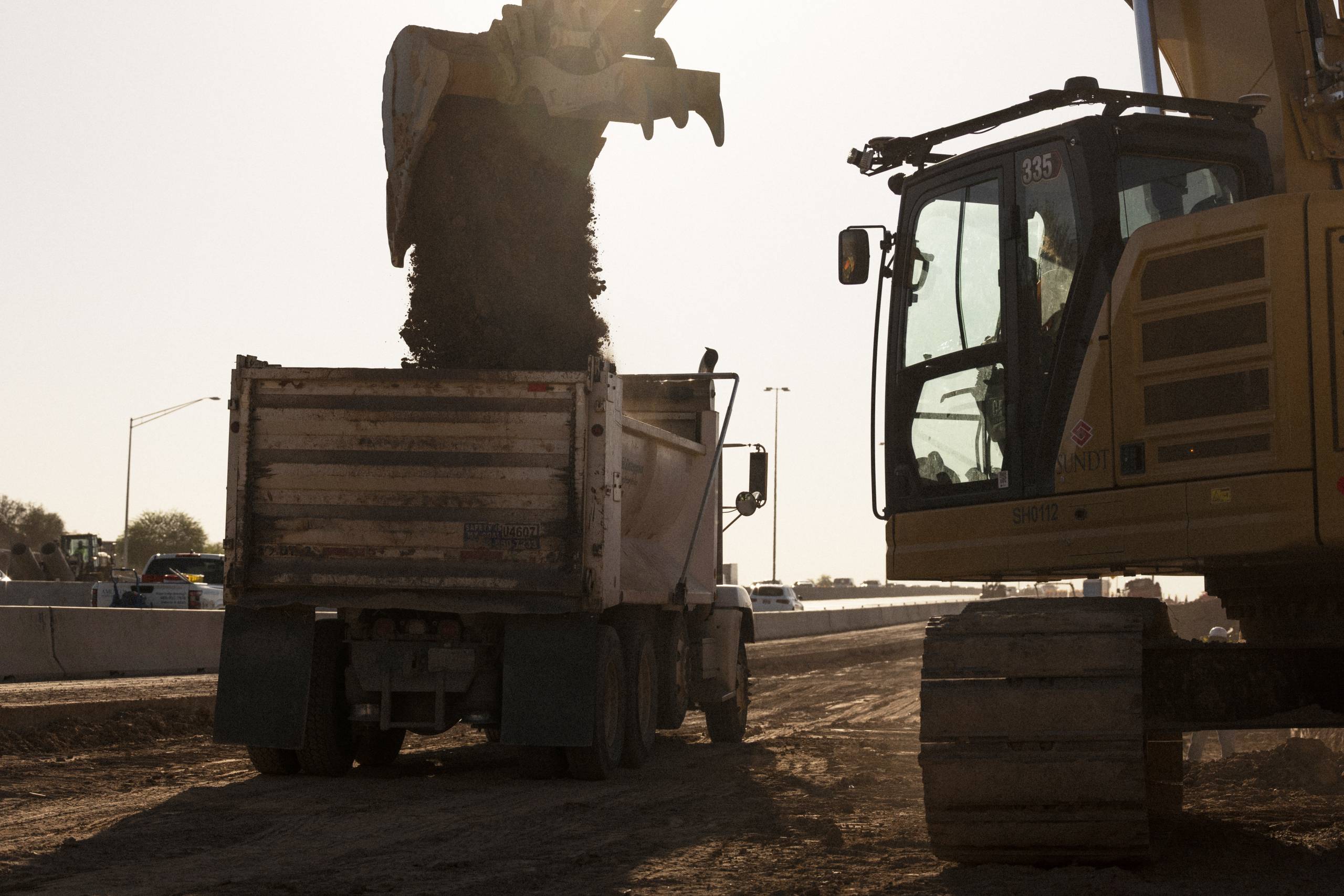 In this lecture, Boris will share an honest account of that journey and its lessons, including the energizing wins, the wrong turns and painful surprises, and the moments where an earlier experience turned out to matter more than expected. Closing with a deeper look at Bedrock, he will share why he believes autonomous construction is one of the most important problems robotics can tackle right now, driven by a unique convergence of maturing technology and critical industry need. For students at the beginning of their own paths, this is a talk about how a career in robotics and entrepreneurship might actually unfold, the many variables one navigates in the journey, and why the connections you cannot yet see may end up being the most valuable ones.
About the Lecture: The Yata Memorial Lecture in Robotics is presented by the Robotics Institute, in conjunction with the SCS Distinguished Lecture Series. Teruko Yata was a postdoctoral fellow in the Robotics Institute from 2000 until her untimely death in 2002. After graduating from the University of Tsukuba, working under the guidance of Prof. Yuta, she came to the United States. At Carnegie Mellon, she served as a post-doctoral fellow in the Robotics Institute for three years, under Chuck Thorpe. Teruko’s accomplishments in the field of ultrasonic sensing were highly regarded and won her the Best Student Paper Award at the International Conference on Robotics and Automation in 1999. It was frequently noted, and we always remember, that “the quality of her work was exceeded only by her kindness and thoughtfulness as a friend.” Join us in paying tribute to our extraordinary colleague and friend through this most unique and always exciting lecture.
Keynote – The Future of AI and Robotics

Robotics Institute, Carnegie Mellon University
11:00 am – 12:00 pm
Rashid Auditorium (Gates-Hillman Center 4401)
In-person
Open to the public
The last decade has seen extraordinary advances in AI. The potential arrival of Artificial General Intelligence (AGI) has profound implications for future of our society. We anticipate a world where AI assistants and humanoid-robots will perform most of the tasks requiring human expertise and skill at 10% of current costs. In this paradigm, essential services—including food, housing, energy, education, healthcare, and transportation—will be provided via Universal Basic Services, signaling a historic shift from a society of scarcity to one of abundance.
This transformation raises a critical concern: widespread displacement of traditional labor. What is the human role when AI can do everything? This talk presents an alternative scenario: a “Human-in-the-Loop” evolution. In this model, humans transition into high-level supervisory roles, collaborating with AGI to train robots in novel skills and adapt them to unforeseen tasks.
We explore this as the “Maharaja Model” where technology serves humanity so comprehensively that work will be optional for humans. Finally, we will discuss how institutions like the Robotics Institute must lead this transition, developing the hybrid technologies and ethical frameworks necessary to bridge the gap between our current economy and a robot-assisted future.
Raj Reddy is a University Professor of Computer Science and Robotics and Moza Bint Nasser Chair at Carnegie Mellon University. He was an Assistant Professor at Stanford from 1966-69 and Faculty Member at Carnegie Mellon since 1969. He served as the founding Director of the Robotics Institute from 1979 to 1991 and the Dean of School of Computer Science from 1991 to 1999.
He has been active in AI research for over five decades in the areas of AI, Speech Understanding, Image Understanding, Robotics, Multi-sensor Fusion, and Intelligent Agents. Dr. Reddy’s current research interests include: Technology in Service of Society, Voice Computing for the 3B semi-literate populations at the bottom of the pyramid, Digital Democracy, and Learning Science and Technologies.
He is a member of the National Academy of Engineering and the American Academy of Arts and Sciences. He served as co-chair of President Clinton’s Information Technology Advisory Committee (PITAC) from 1999 to 2001. Dr. Reddy is the recipient of the Legion of Honor in 1984, the ACM Turing Award in 1994, the Padma Bhushan in 2001, the Honda Prize in 2005 and Vannevar Bush Award in 2006.
2026 National Robotics Week Robotics Institute Open House Robot Demonstrations
12:00 pm to 3:00 pm
Perlis Atriium – Newell-Simon Hall 3rd Floor
Open to the public
Sponsored by the Teruko Yata Memorial Fund
Demonstrations will include:
- Biorobotics Lab – Howie Choset – Snake Robots Demo
- Automated Precision Experimentation Laboratories (APEX Labs) Demo by MRSD Team H – Arnav Kharbanda, Juan Muerto, Karthik, Srinivasan, Arnaz Alam Ahmed, John Dolan – We will present a mobile manipulator designed to automate laboratory work, demonstrating autonomous operation for laboratory tasks of handling and moving chemicals.
- HARP Lab: Henny Admoni – Assistive robots hold a lot of promise in helping people with everyday physical tasks like cleaning up a table. But how do these robots learn what they need to know to do those tasks? In this demo, you will see a robot arm that can learn to do different tasks using guidance from human teachers.
- Autonomous navigation and scene understanding: two robots, Ji Zhang – 1x wheeled robot and 1x legged robot will autonomously navigate in the atrium.
- AI Motion Capture – Kris Kitani – Single web camera that estimates human body pose in 3D.
- Dinosuar and Penguin Robots – Steven Man – The Robomechanics Lab will show some of our recent robot designs, including some quadrupeds with dinosaur-inspired spines and a biped penguin robot, along with other demos.